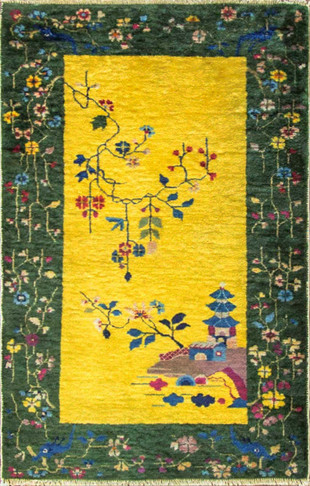
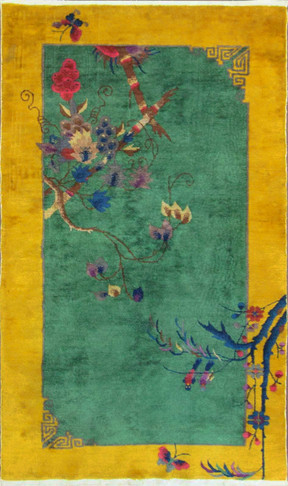
This wonderful Art Deco carpet was made in China, circa 1910s or 1920's. It has purchased from a nice home in New York. Walter Nichols was great American rug producer (the Art Deco rugs which he did not originate them) in Tientsin. The rugs made of wool and silk with bold vibrant colors and the pattern are pictorial scenes and trees, birds, clouds, mountains, dragons, butterfly and flowers. The production of Art Deco rugs started from 1910s-1950s and mostly with western influence.
The most beautiful colors in top condition and stunning design.
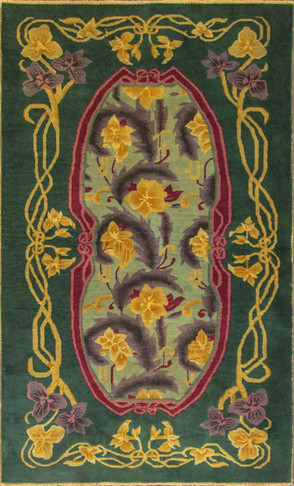
This wonderful Art Deco carpet was made in China, circa 1910s or 1920s. It has purchased from a nice home in Pennsylvania . Walter Nichols was great American rug producer (the Art Deco rugs which he did not originate them) in Tientsin. The rugs made of wool and silk with bold vibrant colors and the pattern are pictorial scenes and trees, birds, clouds, mountains, dragons, butterfly and flowers. The production of Art Deco rugs started from 1910s-1950s and mostly with western influence.
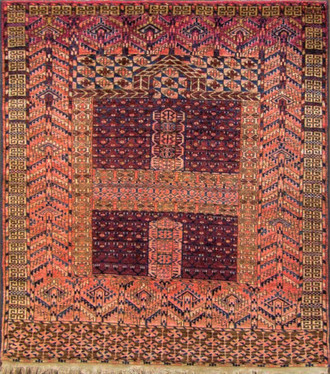
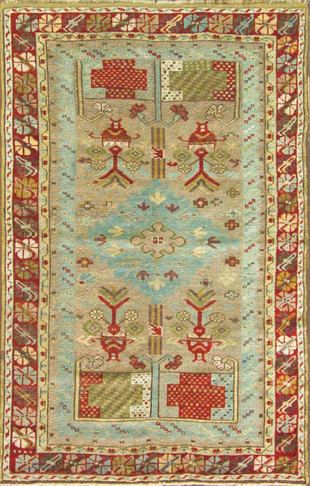
Almost all Turkmen rugs were produced by nomadic tribes almost entirely with locally obtained materials, wool from the herds and vegetable dyes, or other natural dyes from the land. They used geometrical designs that varied from tribe to tribe; most famous are the Yomut, Ersari, Saryk, Salor, and Tekke. Irregularities — considered part of the charm by many rug collectors — were fairly common since natural materials varied from batch to batch and woollen warp or weft may stretch, especially on a loom that is regularly folded up for transport and set up a new at another camp.
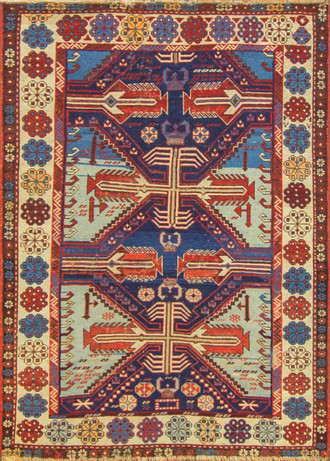
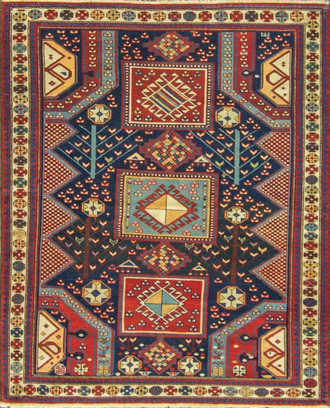
The historic Khanate or administrative district of Shirvan produced many highly decorative antique rugs that have a formality and stylistic complexity that is found in few rugs from the Caucasus. The depth of colors, the complexity of the composition and the phenomenal patterns featured in antique Shirvan rugs set them apart from those produced in other regions of the Caucasus.
Wonderful colors and excellent condition. This wonderful Art Deco carpet was made in China, circa 1910s or 1920s. Walter Nichols was great American rug producer (the Art Deco rugs which he did not originate them) in Tientsin. The rugs made of wool and silk with bold vibrant colors and the pattern are pictorial scenes and trees, birds, clouds, mountains, dragons, butterfly and flowers. The production of Art Deco rugs started from 1910s-1950s and mostly with western influence.
Rare Antique Turkish Ghiordes Prayer Rug, Western Anatolia, Circa 1880
This elegant antique Ghiordes prayer rug is a superb example of late 19th-century Western Anatolian weaving. The rug features a spacious ivory and pale sky-blue prayer field enclosed within a distinctive architectural mihrab, creating a striking sense of balance and refinement.
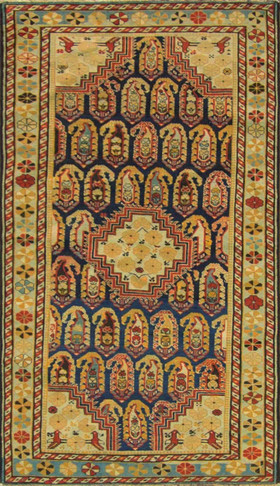
The historic Khanate or administrative district of Shirvan produced many highly decorative antique rugs that have a formality and stylistic complexity that is found in few rugs from the Caucasus. The depth of colors, the complexity of the composition and the phenomenal patterns featured in antique Shirvan rugs set them apart from those produced in other regions of the Caucasus.
Antique Caucasian Khile (Kuba District) Rug
Size: 2'10" x 5'4"
Origin: Kuba District, Northeast Caucasus (Khile village tradition)
Date: Late 19th Century
Construction: Hand-knotted wool on wool foundationThis finely woven late 19th-century Caucasian rug is best attributed to the Khile weaving tradition within the Kuba district, known for its refined execution, intricate lattice structures, and balanced geometric compositions.
The field is organized in a distinctive repeating lattice of elongated, niche-like compartments, each enclosing highly stylized floral and g