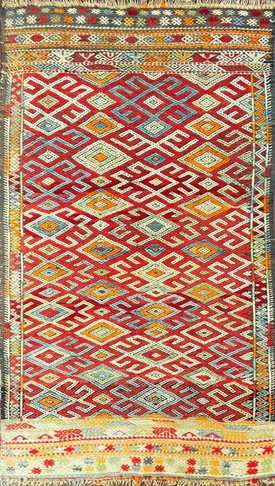
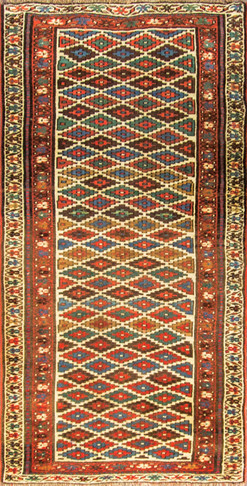
Vintage Handmade Tribal flat weave/kilim Moroccan Runner, c-1950, 4'9" x 8'1", fine natural dyed wool whit geometric pattern in excellent condition and it has been professionally cleaned.
It is an explosion of rich and vivid color color and texture, Impressive multi, red, yellow, green and white color rug.
The Moroccan rugs are most famous for their dynamic color designs and bold geometric patterns,
features bold designs that differ from traditional traditional Persian rugs adding an element of timelessness.
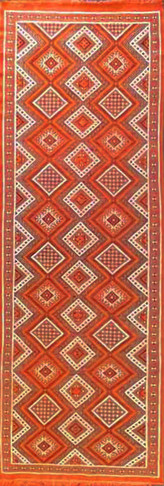
Vintage Handmade Tribal flat weave/kilim Moroccan Runner, c-1970, 3'1" x 9'10", fine natural dyed wool whit geometric pattern in excellent condition and it has been professionally cleaned.
It is an explosion of rich and vivid color color and texture, Impressive orange, green and white color rug.
The Moroccan rugs are most famous for their dynamic color designs and bold geometric patterns,
features bold designs that differ from traditional traditional Persian rugs adding an element of timelessness.
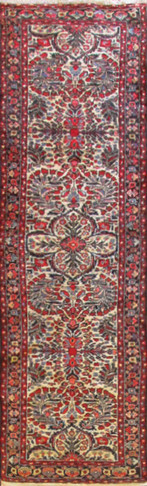
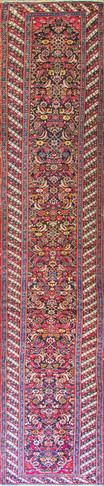
Antique handmade northwest Persian Lilihan/Sarouk runner. natural dyed wool, allover floral traditional design, c-1940's.
This rug is in excellent condition, the two ends and sides are secured and it has been professionally cleaned.
Beautiful ivory background color (mostly these type of runner are in red background color).
Produced south of the city of Arak by Armenians in Persia, Lilihan rugs are known for their design. Traditionally designed with a curvilinear lattice with traditional floral motifs these rugs also feature geometric designs.
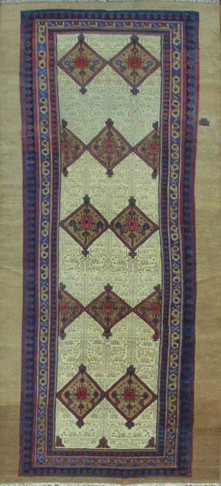
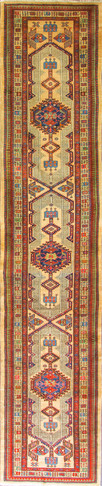
In the province of Azerbaijan northwest of Iran, the village of Serab served as the name source of the antique Serab rugs and they are known for their fine long rugs or runners with a characteristic camel ground and lozenge-shaped medallions.
Bakhtiari rug like stain glass in good condition with naturals dye. The Bakhtiari tribe, based in Chahar Mahal and Bakhtiari, is well-known for their rugs and weaving. They have been weaving rugs exported around the globe since the early 19th century.
The province of Kurdistan is situated in the western part of Iran. Its capital today is Sanandaj, but in the context of carpets, the older name, Senneh, is still used. Around the province the Kurdish people weave strong, durable carpets with juicy patterns. Carpets from the city of Senneh gives an elegant impression with a fine design and tasteful patterns. They are very appreciated both in and out of Iran. The pattern consists of rhombs, mir-e-buteh or Herati.
Serab, Heriz, Serapi, Bakshaish. Karaja and Serapi or Bakshaish all are villages in the district of Heriz north west Persia. Since mid-19th century rugs from these area imported to US and European market. This Karaja rug like many other antique rugs antique rugs that used in US has beautiful appeal of colors, they are soft and mute and great attraction to the viewers.
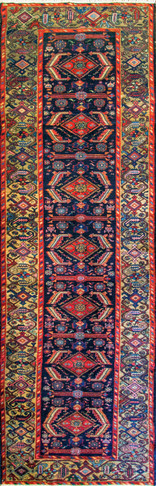
This exceptional Antique Caucasian Karabagh Runner, woven around 1890, is a magnificent example of the artistic tradition of the Karabagh weaving region. Its extraordinary length and elegant allover composition make it an ideal statement piece for a grand hallway, gallery, or expansive interior requiring a truly distinctive antique textile.
The deep midnight blue field is richly adorned with an allover arrangement of stylized floral sprays, palmettes, and delicate vine work rendered in vibrant shades of crimson, raspberry, ivory, soft sky blue, sage green, and golden yellow.