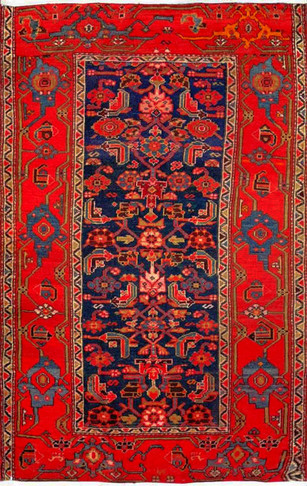
Immerse yourself in the captivating world of Malayer rugs, where Turkish tribal weavers intricately wove tales of artistry. Employing the symmetrical Gourde knot, a hallmark of their craft, these weavers created a distinctive contrast to the asymmetrical knots seen in many Persian pieces. The artistic finesse of Malayer rugs lies not only in their design but also in their technique.
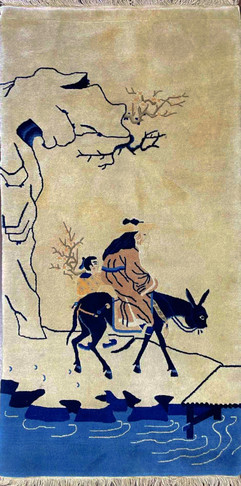
This is an authentic handmade rug. It was made in China around the 1940s . The overall color pallet is ivory over. The materials are wool pile with cotton foundation. The colors are from vegetable dyes, and the general pattern is pictorial design. The overall condition is excellent, especially when its age is taken into consideration. There are no tears, breaks or holes. The side bindings are intact and original. The ends are bound. The pile is high . The rug has been professionally washed.
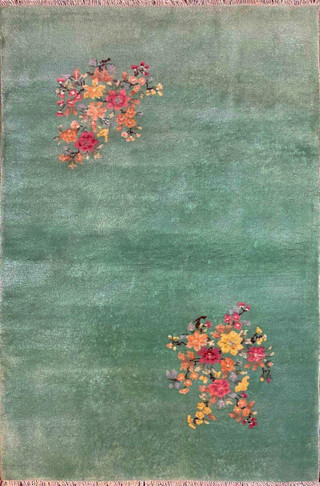
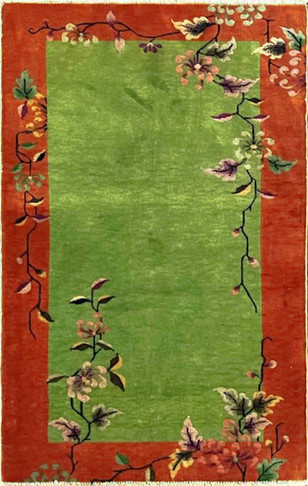
Handmade Vintage Art Deco floral Chinese Rug, 2'11" x 4'10", c-1950's, in green color background with floral traditional design on each corner of the rug. The rug is in excellnt condition and has been professionally cleaned. This wonderful Art Deco carpet was made in China, circa 1950s or 1960s. It has purchased from a nice home in Chicago. Walter Nichols was great American rug producer (the Art Deco rugs which he did not originate them) in Tientsin.
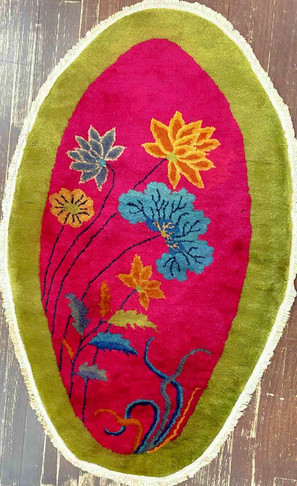
Handmade Antique Art Deco Chinese Rugs, 2'6" x 4'2" , c-1920's, in purple red color background with floral traditional design. These rugs are in excellent condition and has been professionally cleaned. This wonderful Art Deco carpet was made in China, circa 1910s or 1920s. It has purchased from a nice home in Chicago. Walter Nichols was great American rug producer (the Art Deco rugs which he did not originate them) in Tientsin.
Antique Handmade Art Deco Chinese carpet, c-1920's,3' x 4'10". Woven with natural dyed soft wool pile, in green and rust/brown background color and traditional floral design, this carpet is in good condition and professionally cleaned.
This wonderful Art Deco carpet was made in China, circa 1920s or 1910s. It has purchased from a nice home in New York. Walter Nichols was great American rug producer (the Art Deco rugs which he did not originate them) in Tientsin.
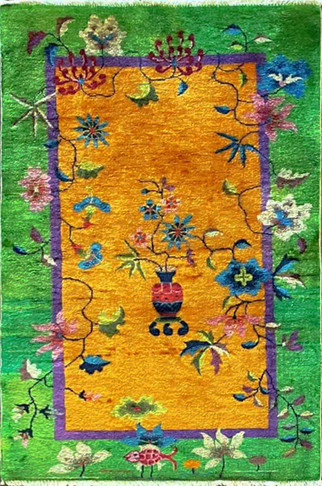
Antique Handmade Art Deco Chinese carpet, c-1920's, 2'11" x 4'10". Woven with natural dyed soft wool pile, in gold and green background color and traditional floral design, this carpet is in good condition and professionally cleaned. It's always a interesting story about this rugs, about this one is the fish that lost and lonely.
This wonderful Art Deco carpet was made in China, circa 1920s or 1910s. It has purchased from a nice home in New York. Walter Nichols was great American rug producer (the Art Deco rugs which he did not originate them) in Tientsin.
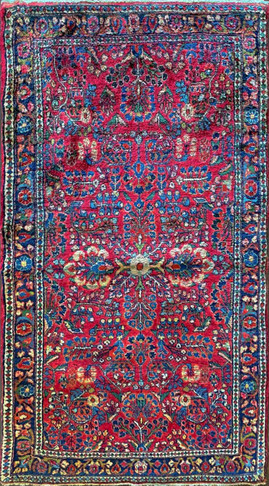
Antique handmade Northwest Persian Sarouk rug, c-1920, 2'6" x 4'10", fine wool, in red and blue color and traditional floral design and this rug has been woven in high quality, the condition is excellent and it has been cleaned professionally.
Antique carpets produced in Sarouk feature Classic curvilinear vine scrolls and opulent arabesques as well as local bouquet-filled designs that represent the diversity of regional carpet-weaving traditions.
The town of Sarouk located in northwest Persia.
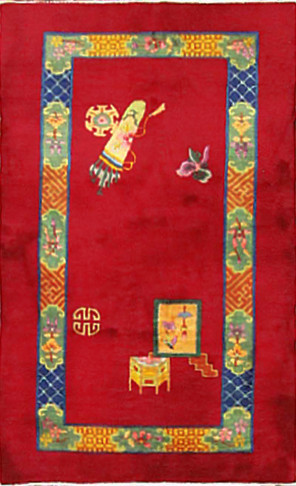
Antique handwoven art deco Chinese rug, c-1920's, made of natural dyed wool with red background color and multi colors border, designed with traditional Chinese symbolisms, describer's the worlds knowledge.
It's in excellent condition, the two ends and sides are secured and original, nice high and even pile throughout of the rug and good quality with fine wool. It has been professionally cleaned.
It's features and colors are very appealing, decorative and attractive .