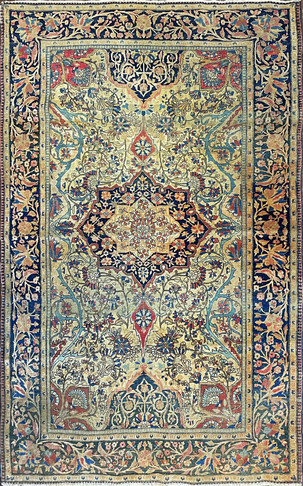
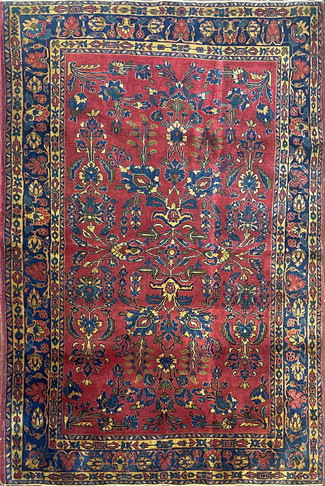
This beautiful antique Persian Sarouk Feraghan rug, woven around 1880, is an outstanding example of the highly regarded weaving tradition of the Feraghan district.
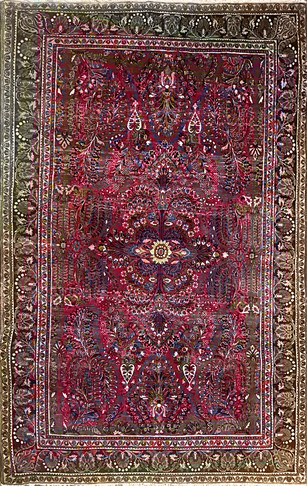
This elegant antique Persian Sarouk rug, woven around 1920, is a beautiful example of the classic Sarouk tradition, celebrated for its exceptional craftsmanship, luxurious wool, and timeless floral artistry. Measuring 4'3" × 6'7", it is an ideal accent size that works equally well in both traditional and contemporary interiors.
The rug displays a rich raspberry-red field filled with a graceful arrangement of stylized flowering plants, palmettes, and elegant vinery radiating around a refined central medallion.
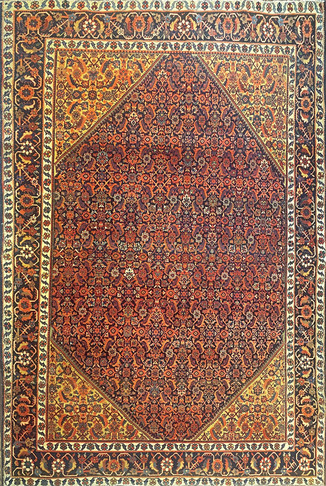
This exceptional antique Persian Feraghan rug, woven circa 1880, is a beautiful example of one of Persia's most celebrated weaving traditions. Measuring 4'6" × 7'4", it displays the refined craftsmanship and artistic sophistication that have made Feraghan rugs highly prized by collectors for well over a century.
The rug features a richly detailed Herati (Mahi) pattern covering the entire field, framed by ivory spandrels and an elegant floral border. The intricate allover design creates remarkable visual depth while maintaining perfect symmetry and balance.
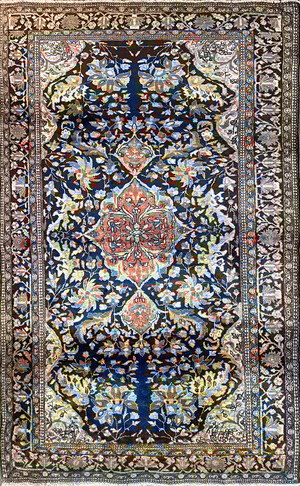
This elegant antique Persian Feraghan Sarouk rug, woven around 1900, is a beautiful example of the transition between the classic Farahan weaving tradition and the refined floral designs that later became synonymous with Sarouk carpets. Measuring 4'3" × 7', it is in perfect condition, retaining a full, luxurious pile, crisp detail, and exceptional color.
The deep midnight navy field is richly adorned with an intricate allover floral design centered by graceful medallion motifs, surrounded by scrolling vines, flowering palmettes, and delicate botanical forms.
This beautiful antique Persian Mohajeran Sarouk rug, woven around 1910, is an outstanding example of the highly regarded Mohajeran workshops, celebrated for producing some of the finest Sarouk rugs of the early 20th century.
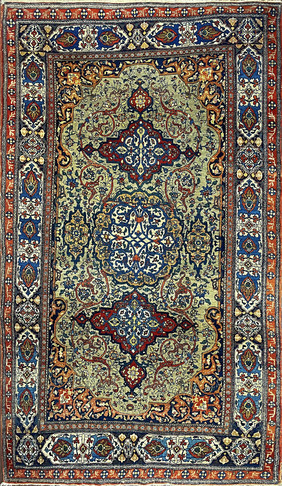
This exceptional antique Persian Isfahan rug, woven circa 1880, is a rare and highly decorative example of nineteenth-century Persian artistry. Distinguished by its remarkably fine weave, elegant proportions, and uncommon design, it represents the refined craftsmanship for which early Isfahan carpets are admired.
This exceptional antique Persian Mohtasham Kashan, woven circa 1870, is a beautiful example from the legendary Mohtasham workshop, whose carpets are regarded among the finest and most artistic Persian rugs produced during the nineteenth century.
This beautiful antique Persian Mohajeran Sarouk, woven circa 1910, is a fine example of the elegant craftsmanship and luxurious wool that have made Mohajeran rugs among the most desirable Persian carpets of the early twentieth century. Combining a graceful floral composition with rich colors and a finely executed weave, this rug offers both decorative beauty and lasting collector appeal.
The field displays a vibrant rose-red background adorned with a beautifully balanced Tree of Life composition.