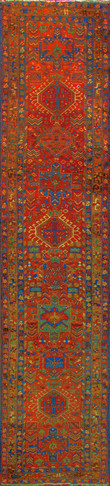
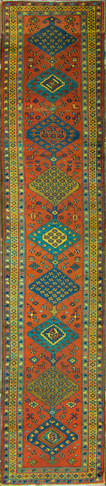
Antique Persian Heriz/Serapi, hailing from the Iranian province of Eastern Azerbaijan and the encompassing Heriz region, hold a rich tapestry of history and craftsmanship. The village of Serab, nestled to the south of the Heriz region in North West Persia, is the venerable birthplace of these exquisite rugs.
Serapi, a term often reserved for the most exceptional antique rugs from the Heriz vicinity, has carved out a distinct niche in the world of rug connoisseurs.
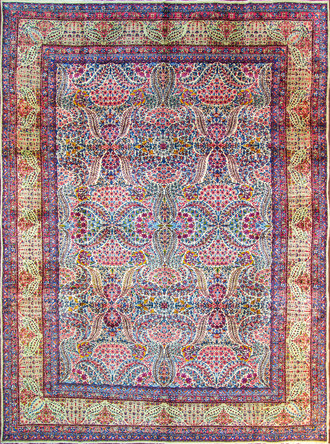
To the south east of Persia is the city of Kerman or Kirman and to the north of Kerman is the village of Laver or Raver which has a rug weaving history at least as long as that of Kerman. during the 1920s produce many rugs for the US market but the rugs been produce in this region since the sixteen century.
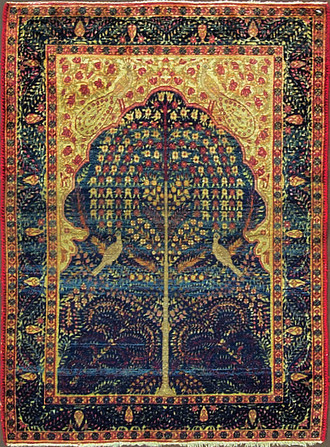
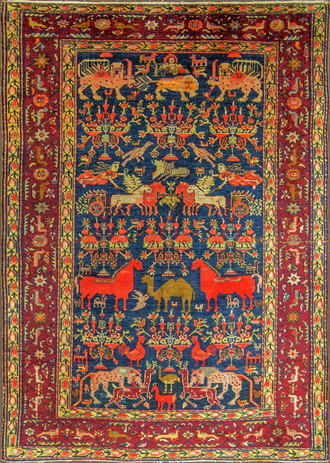
An Striking and beautiful antique silk Feraghan rug, depict the king of
Persia from Zoroastrian dynasty ( on very top middle of the rug fallows with three lions and the sun over the lion a sign of Zoroastrian era.). Fallowed with three set of candlesticks and two birds of peace, farther down depict a interesting of two chariots with two angels on top of them and again a row of three different shape of candlesticks fallowed with horses camel birds and guard dogs, chickens and seers.
The borders showing the birds of happiness and beauty.
This great silk rug purchased from Cincinnati estate.
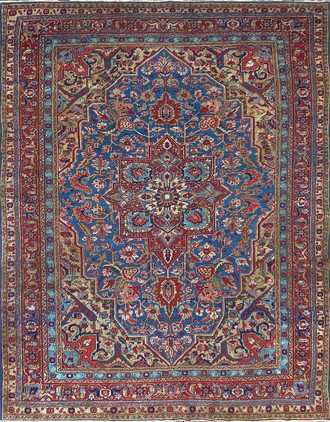
Bakshaish Rugs - made in Persia, Bakshaish (Bakhshaish or Bakhshaysh) Rugs adapt the style and feeling of the finest smaller village or tribal rugs to the the scale of room-size pieces. The drawing of Bakshaish rugs and carpets is always bold, geometric, dynamic, and abstract. Bakshaish carpets may utilize medallion or allover designs descended from classical antique Persian rugs. Bakshaish carpets are also admired for their lustrous wool and rich, transparent color, again in the tradition of the best tribal pieces.
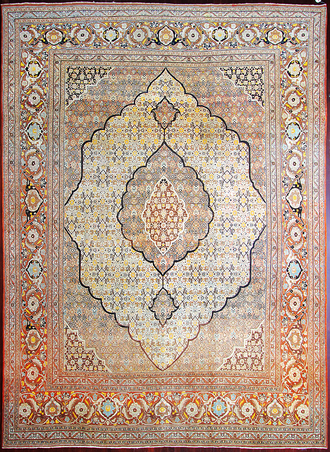
The city of Tabriz is situated in North West Persia and it is one of the largest cities and also the capital in the province of Azerbaijan and was the earliest capital of the Safavid dynasty, and it can claim to have been a center of carpet production longer than any other city in Iran. The population comprising of the Azaris, who are the largest ethnic minority in Iran and speak the Turkish dialect. The city is old and has for centuries been a very important trading place and border station.
A good Tabriz has a short and rough pile.
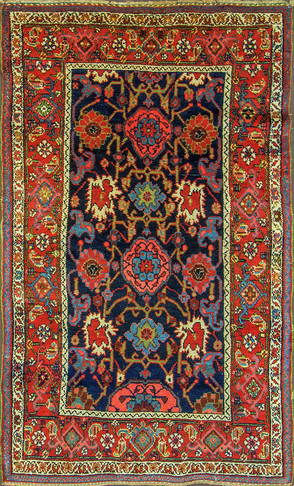
Antique Bidjar Rugs Bidjar is a town in Persian Kurdistan located in north-west Persia. All of the knots are symmetrical and the rows are beaten down during the weaving process producing a dense compact fabric. The many designs depict the Kurdish influence of the area and often floral and classical geometric motifs are employed as well as the use of large, whimsical medallion designs. The color palate is rich and jewel toned making the Bidjar a highly desirable rug sought after by designers. They are mostly made of wool over wool goundatio