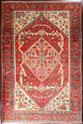
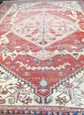
A Serapi Carpet
Click image to enlarge it


Size:
10'2" x 15'6" - 310cm x 472cm
Origin:
Period:
Late 19th century
Materials:
Wool pile, cotton warp & weft
Condtion:
Very good - minor areas of restoration
Price:
$34,000.
Item#:
15975
Notes:
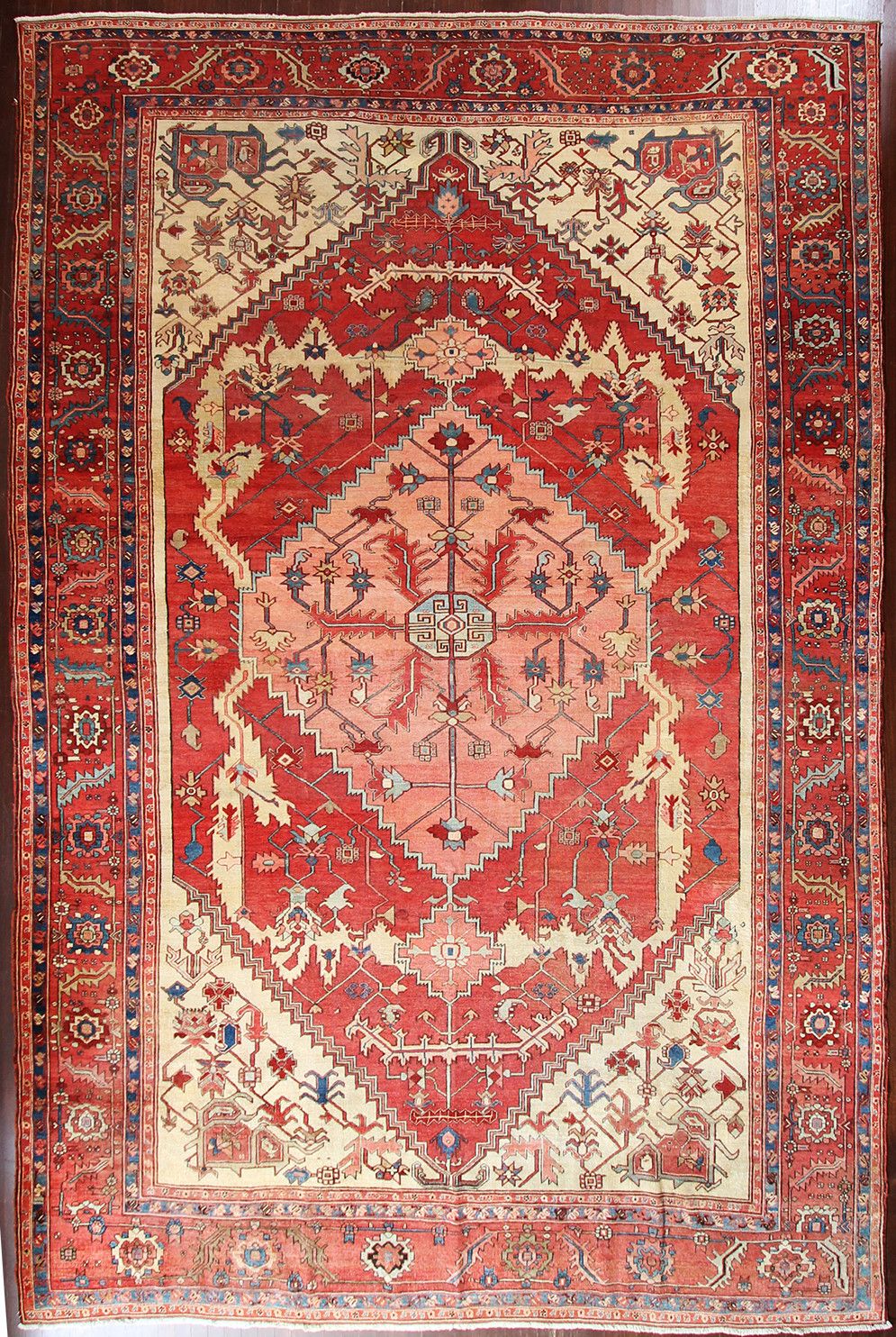
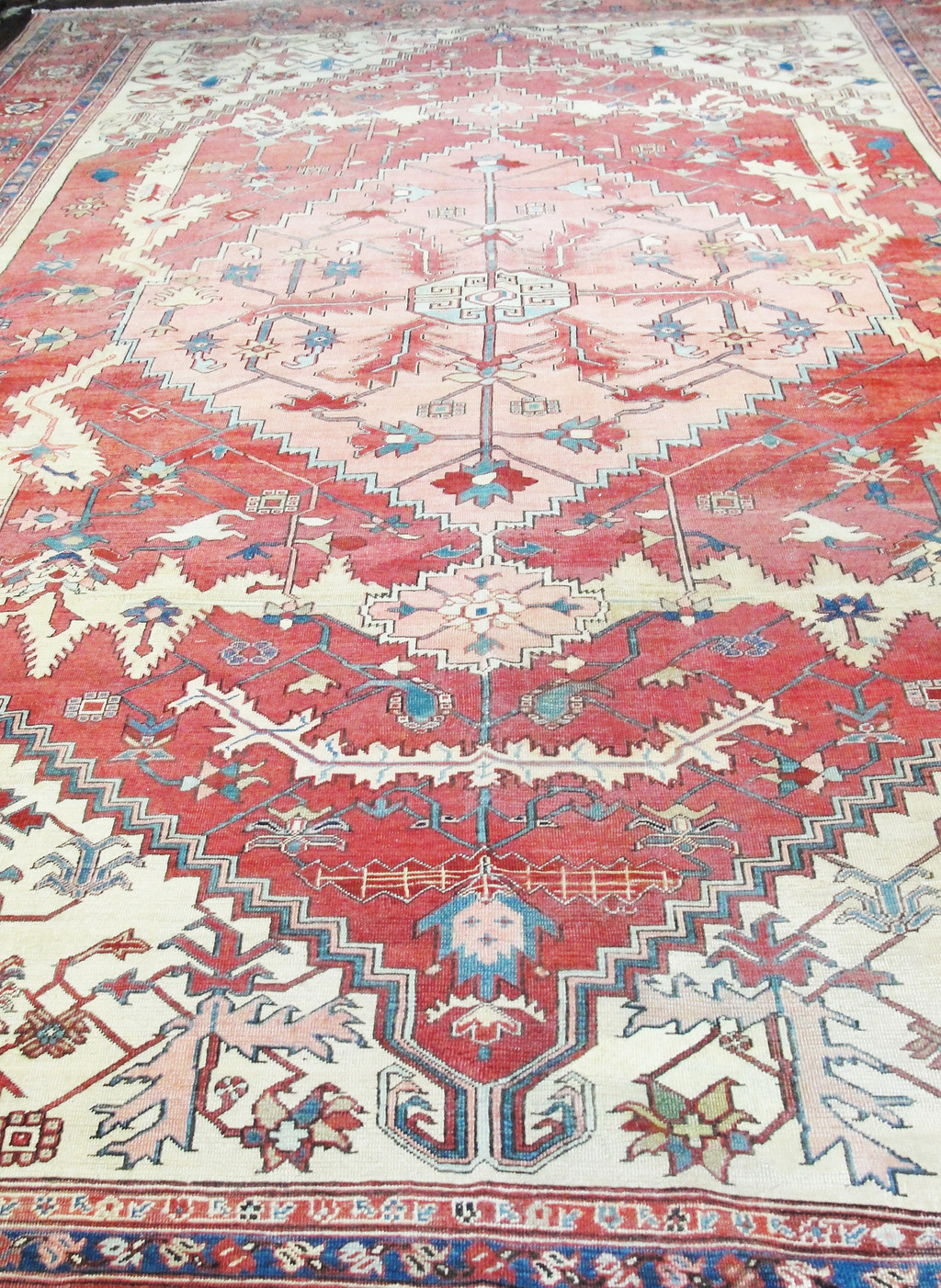
Fine 19th Century Antique Serapi Carpet — Northwest Persia
This exceptional 19th century antique Serapi carpet from Persia represents one of the most admired and collectible traditions of the Heriz weaving region. Woven in the rugged mountains of Northwest Persia, Serapi carpets are celebrated for their refined craftsmanship, spacious compositions, and powerful architectural presence.
Although often associated with Heriz, “Serapi” is not a village or tribal name. The term derives from Serab — historically the market town where Persian carpets from surrounding mountain villages were brought for trade, nearly 30 miles from the weaving areas. “Serapi” comes from Serab-i, meaning “of Serab,” making it a historic market designation rather than a geographic origin.
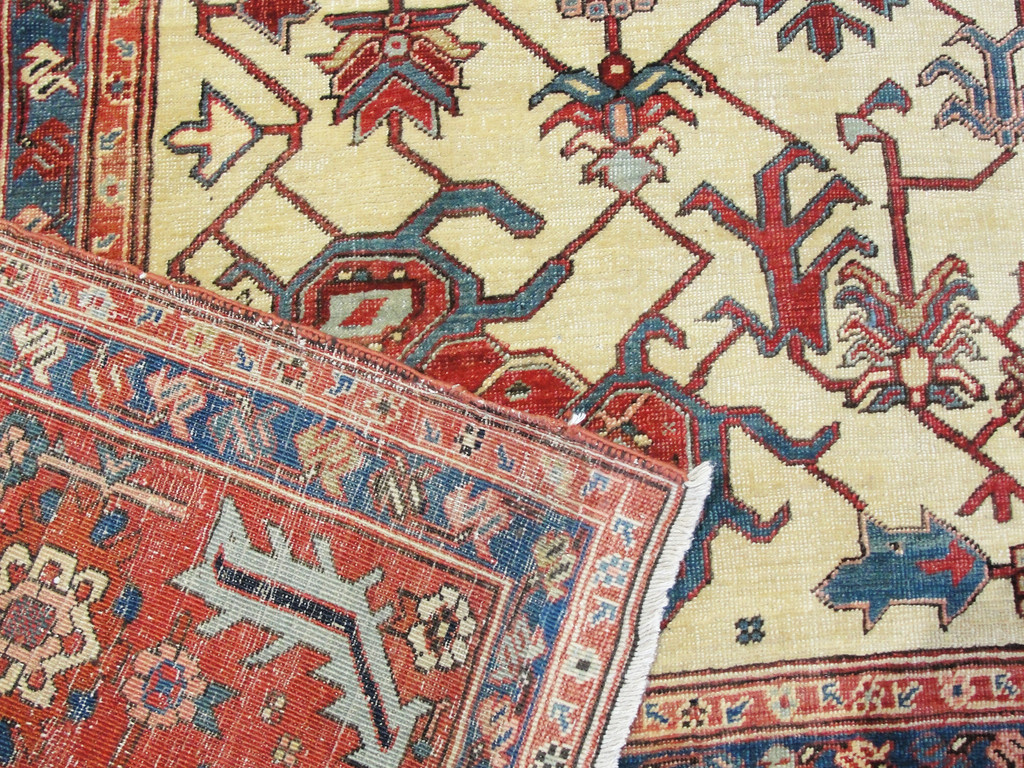
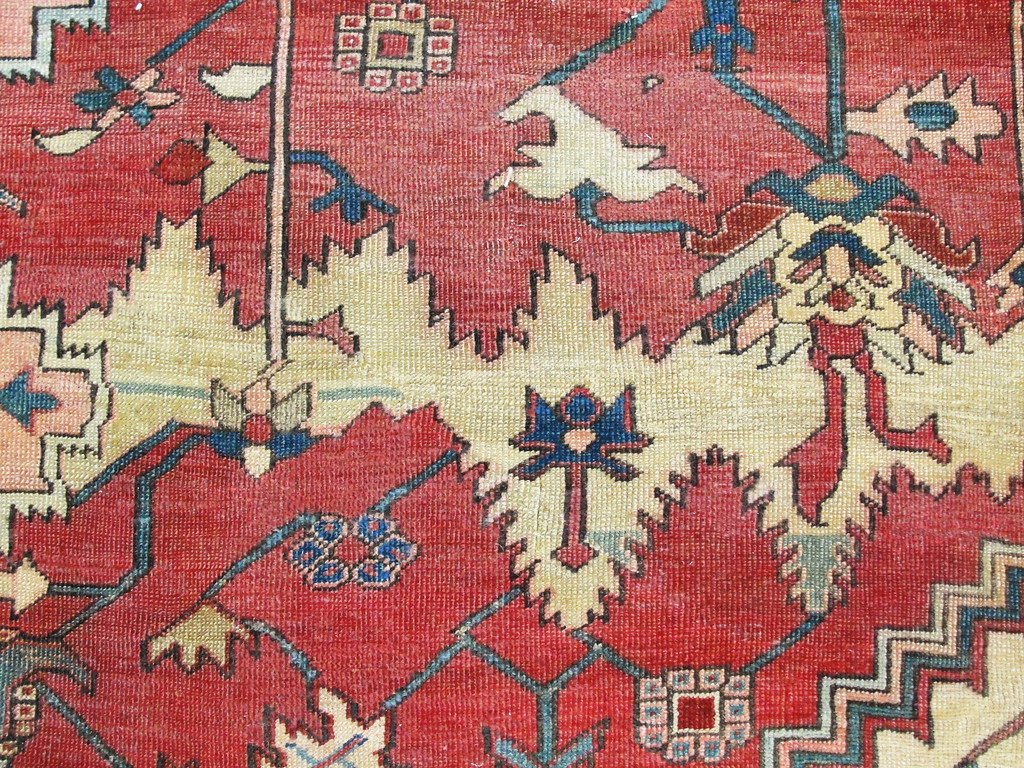
Serapi rugs are distinguished from other Heriz weavings by their finer knotting, more precise drawing, and notably large-scale, spaciously arranged motifs. The bold geometric medallions, angular vinery, and dramatic corner spandrels display a striking sense of balance and clarity. These designs are widely believed to reflect the influence of tribal Caucasian weaving traditions north of the Aras River, linking Persian and Caucasian artistic heritage through centuries of cultural exchange.
The wool used in these carpets — drawn from highland flocks — is typically lustrous, resilient, and rich in natural dyes, giving Serapi carpets their warm, earthy palettes and enduring brilliance. Their strength and durability are matched by a timeless aesthetic that works beautifully in both traditional and sophisticated contemporary interiors.
Highly sought after by collectors and designers alike, a fine 19th century Serapi carpet is more than a decorative floor covering — it is a powerful statement of Persian artistry, regional history, and enduring tribal influence.