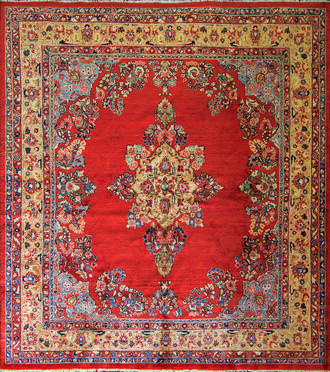
Sarouk, a small village and its neighboring villages in northwestern Iran are the source of large numbers rugs imported into the United States. The Sarouk carpet production came into existence around 1880 specifically for the European and North American markets.
Exquisite Antique Persian Feraghan Sarouk Carpet - A Gem from Chicago Collection
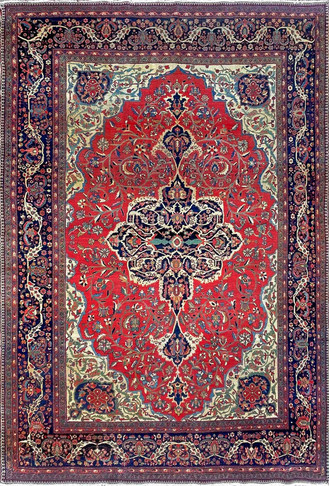
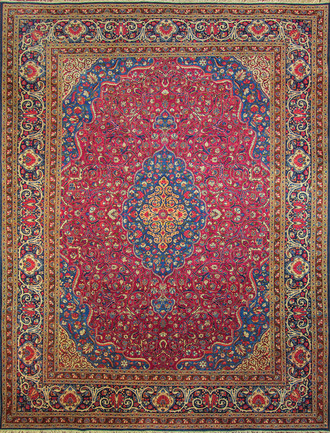
Behold the timeless allure of this incredibly fine antique Feraghan Sarouk carpet, a masterpiece that graces the esteemed Chicago collection. Dating back to the 1880s, this magnificent piece measures an impressive 8'10 x 12'3, showcasing the artistry of Persian craftsmanship at its finest.
Adorned with a captivating floral pattern and a central medallion, the carpet boasts a palette of the most enchanting colors in the world.
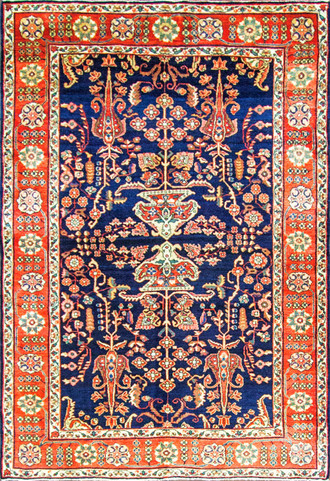
Sarouk Mohajiran Feraghan. The blue field woven with flowering fan palmettes extending to a central floral spray and flower-filled urns within rust flowering palmette and vine border by blue and ivory guard borders. The source of this important provenance has been in the village of Sarouk. North of Arak (formerly Sultanabad). Sarouks are known to be of high quality. The pile is usually higher than the average Persian rug and therefore Sarouks are rather heavy and solid rugs, the wool being used is high quality durable wool.
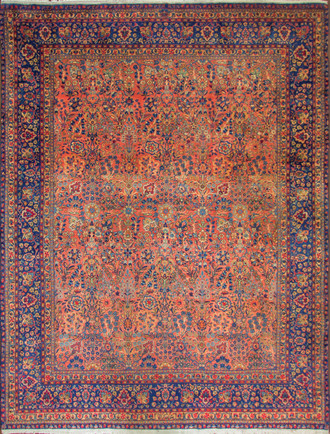
To the south east of Persia is the city of Kerman or Kirman and to the north of Kerman is the village of Laver or Raver which has a rug weaving history at least as long as that of Kerman. During the 1920s produce many rugs for the US market but the rug's been produced in this region since the 16th century. The design of the carpet is sea plant on salmon color background.
A Kashan rug made in Persia in the city of Kashan in Isfahan Province North Central Iran. There was production of Persian carpet at Royal workshops in the 17th and early 18th century. The Persian carpet workshops ceased production in about 1722 after the Afghan invasion. Persian carpet production was very minor until the 20th century. Historically, Kashan was a major center in the garment trade. In the late 19th century, the market shifted and the local industry went from fine wool cloth to fine wool carpets. High quality wool was sourced from Sabzevar.
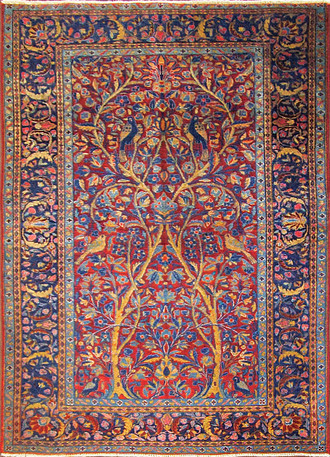
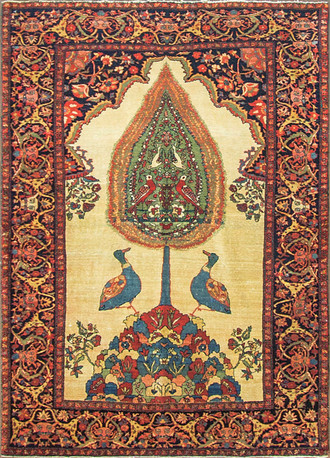
A very fine and unusual antique Persian Feraghan Sarouk featuring an elegant Tree of Life design rising from a flowering garden mound against a luminous ivory field. At the center stands a magnificent cypress-like flowering tree populated with birds and floral ornament, flanked below by a pair of peacocks rendered in rich shades of sapphire blue, rose, ivory, and soft green.
The spacious ivory field creates a striking contrast with the intricately drawn midnight-blue border, which is filled with scrolling vinery, palmettes, rosettes, and flowering arabesques.
This elegant antique Persian Dabir Kashan carpet is an exceptional example of the refined craftsmanship associated with the renowned Dabir workshop, one of the most respected weaving ateliers in Kashan during the late Qajar period. Woven around 1910, it displays the superior knot density, beautifully balanced drawing, and luxurious kork wool that distinguish the finest Dabir productions.
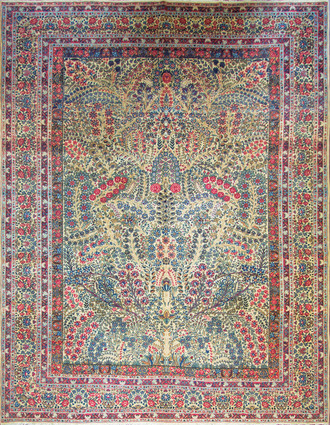
9'10" x 12'7" Unusual Tree of life Persian Lavar Kerman carpet. c-1920.
This exquisite antique Kerman is inspired by the fabric and wallpapers designed by William Morris. It depicts an Oriental garden or paradise theme with the tree of life, but in place of the symmetrical presentation and animal or human inhabitants customary in Persian designs of this type, this one is asymmetrical and almost entirely floral, which, like much of its detail, recalls Neo-medieval design and gold-on-black coloration of Morris's work.