Construction: Hand-knotted silk pile on a silk foundation
Condition: Structurally sound with good pile, but several holes, missing areas, and edge damage. The silk foundation remains stable and the rug is not dry or rotten.
This rare antique Persian Silk Heriz rug is an exceptional survivor from the late 19th century, representing one of the most unusual and collectible variations of Heriz weaving. While Heriz rugs are traditionally woven in wool, silk examples from this period are exceedingly scarce and were likely produced as special commissions for affluent patrons.
Wool and silk Persian rug.
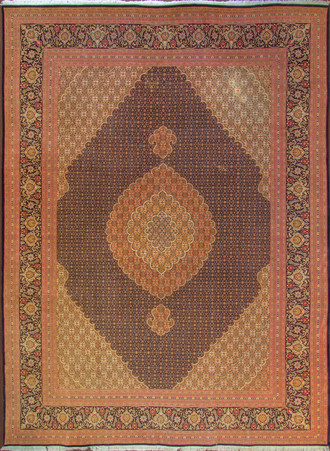
Nain rugs are constructed using the Persian knot and typically have between 300 and 700 knots per square inch. The pile is usually very high quality wool, clipped short, and silk is often used as highlighting for detail in the design.
Construction: Hand-knotted, fine kork wool pile on a cotton foundation.
This elegant antique Persian Dabir Kashan carpet is an excellent example of the refined workshop production associated with the celebrated Dabir atelier of Kashan. Woven during the early 20th century, it displays the exceptional drawing, balanced proportions, and fine knot density that distinguish the finest Kashan carpets of this period.
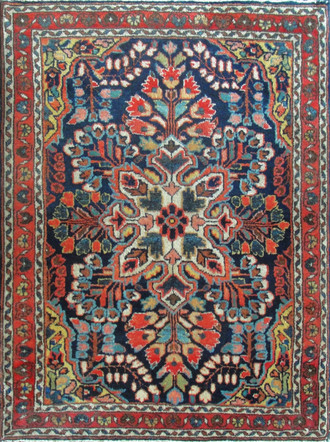
This outstanding Antique Persian Mohajeran Sarouk is an exceptionally decorative example from the celebrated weaving workshops of the Mohajeran district near Sultanabad. Woven around 1910, it is distinguished by one of the most unusual and artistic designs encountered in Sarouk production, making it particularly desirable to collectors seeking something beyond the classic medallion format.
Unlike the more commonly seen Sarouk carpets, this example displays a striking allover floral composition centered on a delicately drawn bouquet rather than a dominant medallion.
Finest Manchester wool on a cotton foundation with natural dyes
This exceptional Antique Persian Kashan Carpet, woven circa 1920, represents one of the finest productions of the renowned Kashan weaving workshops. Woven with luxurious imported Manchester wool, prized for its extraordinary softness, luster, and durability, the carpet reflects the highest standards of Persian craftsmanship during the early twentieth century.
The carpet features an elegant allover floral design without a dominant central medallion, creating a balanced and harmonious composition.
This handsome Antique Persian Bakhtiari Runner, woven around 1900, is an excellent example of the robust craftsmanship and bold tribal artistry for which the Bakhtiari weavers of western Persia are renowned. Its balanced geometric composition and rich natural colors make it a versatile and highly decorative runner, ideal for a hallway, gallery, or traditional interior.
The deep midnight-blue field is anchored by a striking procession of alternating ivory and rust-red octagonal medallions, each enclosing stylized geometric motifs and symbolic tribal emblems.
This handsome antique Persian Bakhtiari rug, woven around 1890, is a richly colored and highly decorative example of late 19th-century tribal weaving. It features an elegant allover lattice design filled with alternating floral medallions, rosettes, and stylized blossoms arranged across a deep midnight-blue field.
The repeating motifs are woven in warm shades of madder red, rust, golden yellow, soft green, ivory, and muted blue, creating a lively but well-balanced composition.
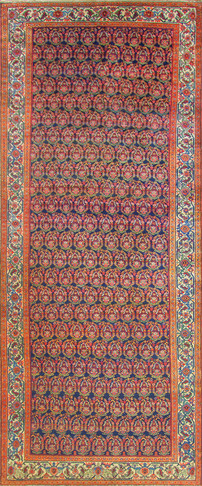
This is a beautiful antique Persian Afshar rug, woven by the renowned Afshar tribes of southeastern Persia. It features a striking allover boteh (paisley) design arranged in neat rows across a rich midnight-blue field, creating a wonderfully balanced and highly decorative composition. The vibrant crimson botehs, accented with ivory, sky blue, and golden highlights, stand out dramatically against the deep indigo background.
One of the rug's most distinctive features is its colorful kilim end finish, displaying the traditional chevron pattern characteristic of fine Afshar weavings.