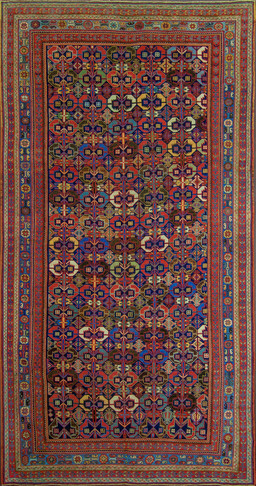
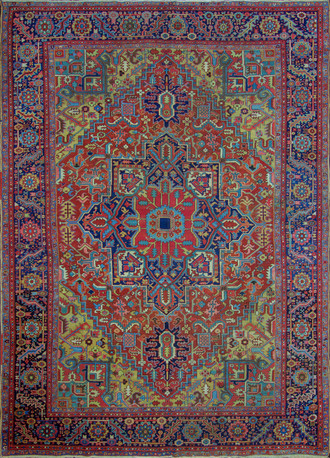
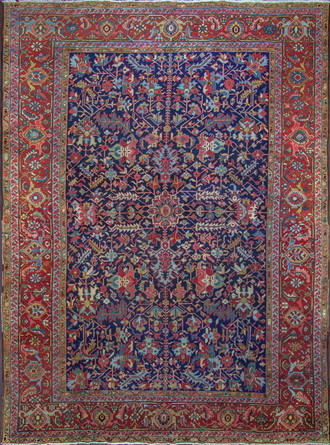
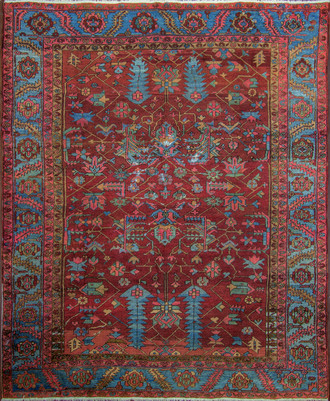
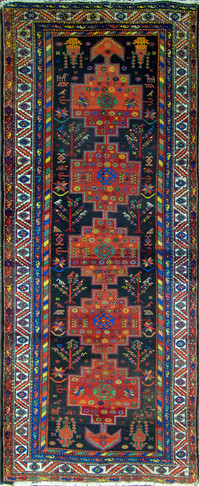
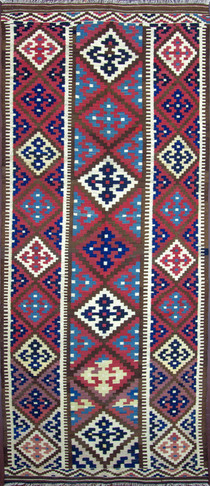
A very attractive antique Bakhtiari gallery carpet with a bold tribal character and an unusually lively design. The elongated dark brown to nearly black field is centered by a vertical succession of five large stepped geometric medallions, primarily in warm madder and terracotta red.
Each medallion is individually decorated with small rosettes, hooked devices, crosses and colorful geometric ornaments, giving the carpet wonderful variety rather than a rigidly repetitive appearance.
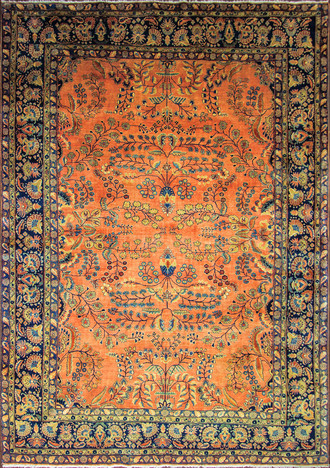
Antique Persian Mohajeran Sarouk, c-1910, the rug has very high density of knotting and it is made of fine manchester wool.
The floral design of the rug has a pleasant appeal because the field is field is very open.
The combination of colors are very appealing.
Sarouk, a small village and its neighboring villages in northwestern Iran are the source of large numbers rugs imported into the United States. The Sarouk carpet production came into existence around 1880 specifically for the European and North American markets.
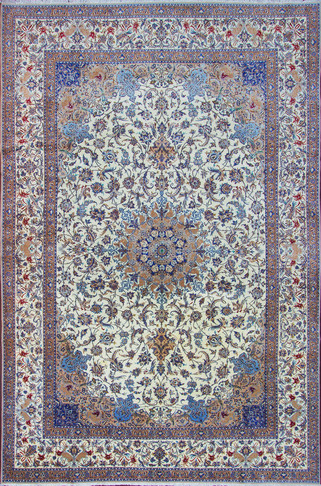
Nain rugs are constructed with Persian knot and typically have between 300 and 700 knots per inch,usually are with very high quality wool, clipped short, and silk is often used as highlighting for detail in the design. Nains utilize the Shah Abbas design and make use of flowing design such as flowers and tendrils.
The most famous and influential Nain masterweaver is Habibian and Reza Jafari Naini.