A Serapi Carpet
Click image to enlarge it



Size:
11'4" x 18'4" - 345cm x 559cm
Origin:
Period:
C 1880
Materials:
Wool pile, cotton warp & weft
Condtion:
Very good - minor restorations
Price:
Upon request
Item#:
00704
Notes:
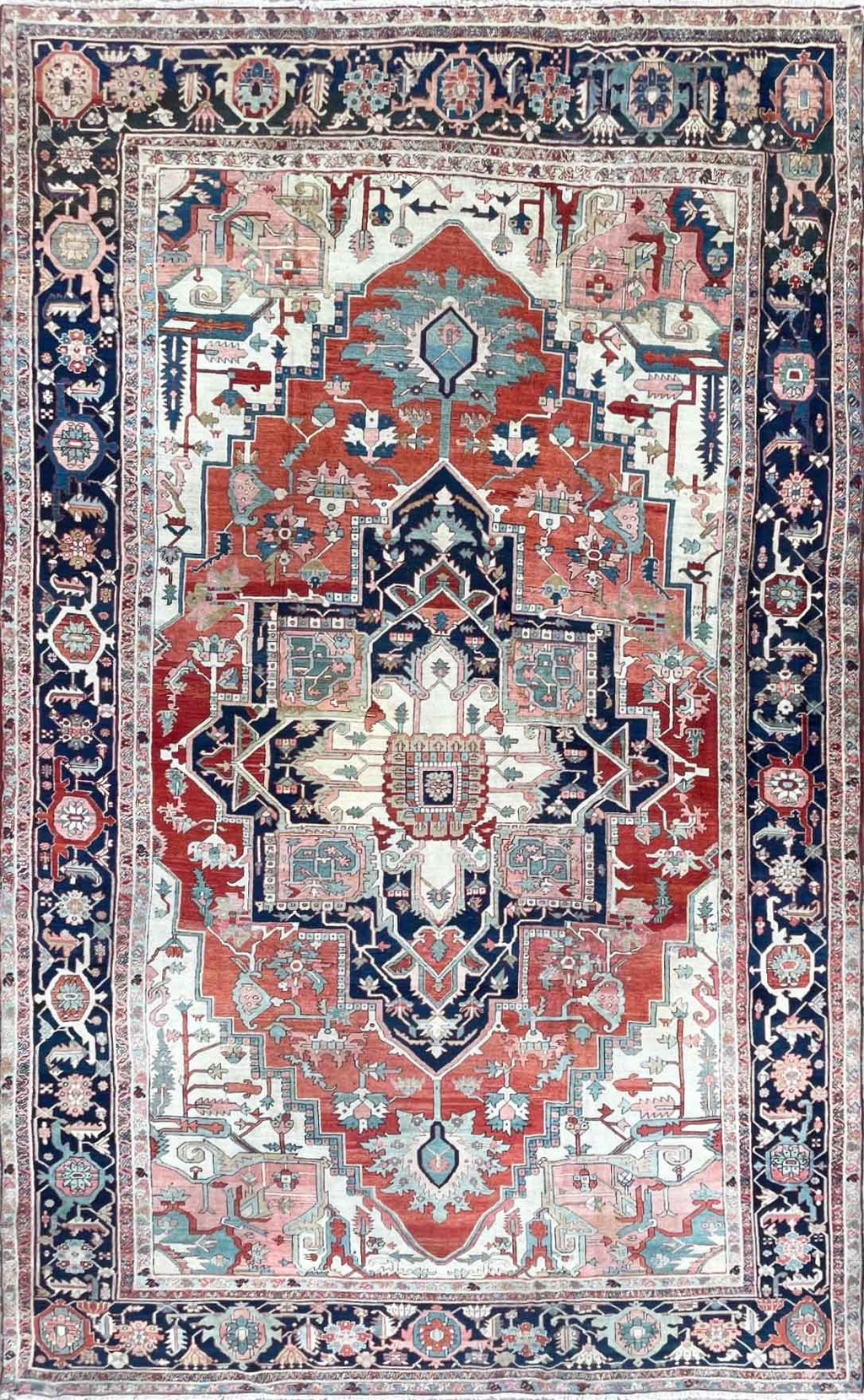
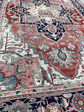
This magnificent antique Persian Serapi carpet is an outstanding example of the grand room-size carpets woven in the Heriz region during the late 19th century. Dating to approximately 1880, it embodies the qualities that have made Serapi carpets among the most admired and collectible of all Persian rugs. Their spacious geometric drawing, bold architectural medallions, exceptional hand-spun wool, and rich vegetable dyes have made them favorites of collectors, museums, and leading interior designers.
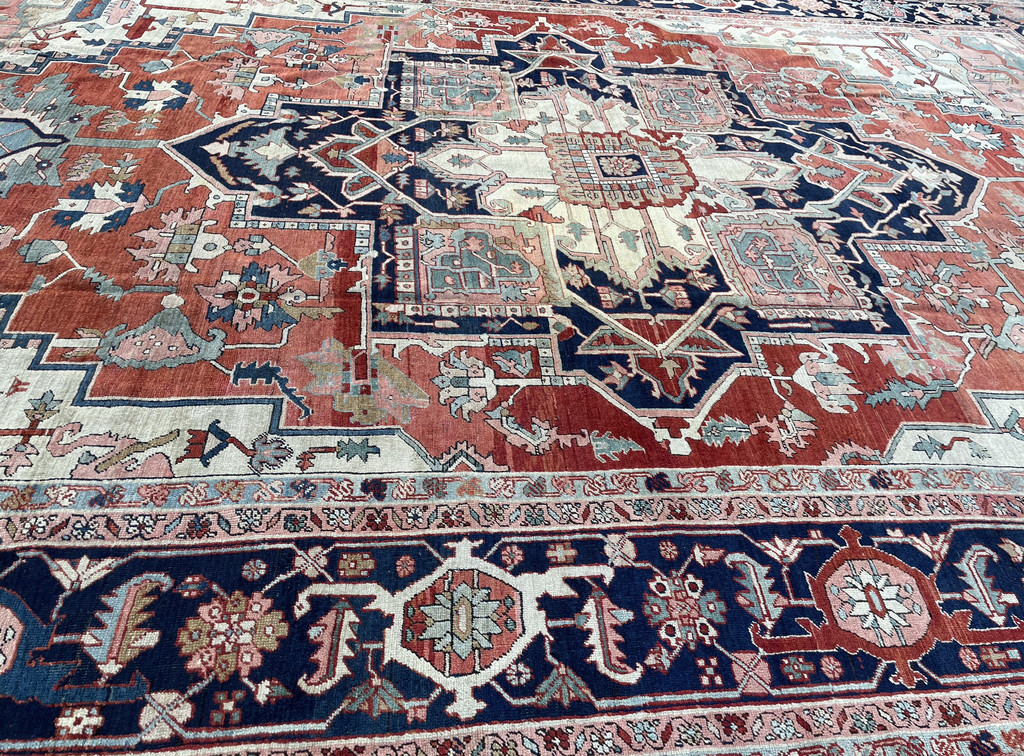
The design is centered by a dramatic elongated navy-blue medallion set against a glowing terracotta-red field. The composition is beautifully balanced with ivory reserves, pale celadon blue, soft salmon pink, and warm camel accents that create remarkable visual depth. Stylized palmettes, angular vinery, rosettes, and geometric botanical motifs fill the field with elegance while maintaining the spacious character that distinguishes the finest Serapi carpets from the denser floral designs of city workshops. The harmonious balance between bold geometry and refined ornamentation is one of the defining characteristics of authentic late-19th-century Serapis.
The broad midnight-blue main border is richly decorated with alternating shield-like cartouches, palmettes, and angular floral motifs, framed by finely drawn guard borders that complete the composition with exceptional harmony. The colors are particularly beautiful, featuring rich terracotta, deep indigo, ivory, celadon, soft robin's-egg blue, and muted rose, all derived from natural vegetable dyes that have mellowed gracefully over nearly a century and a half.
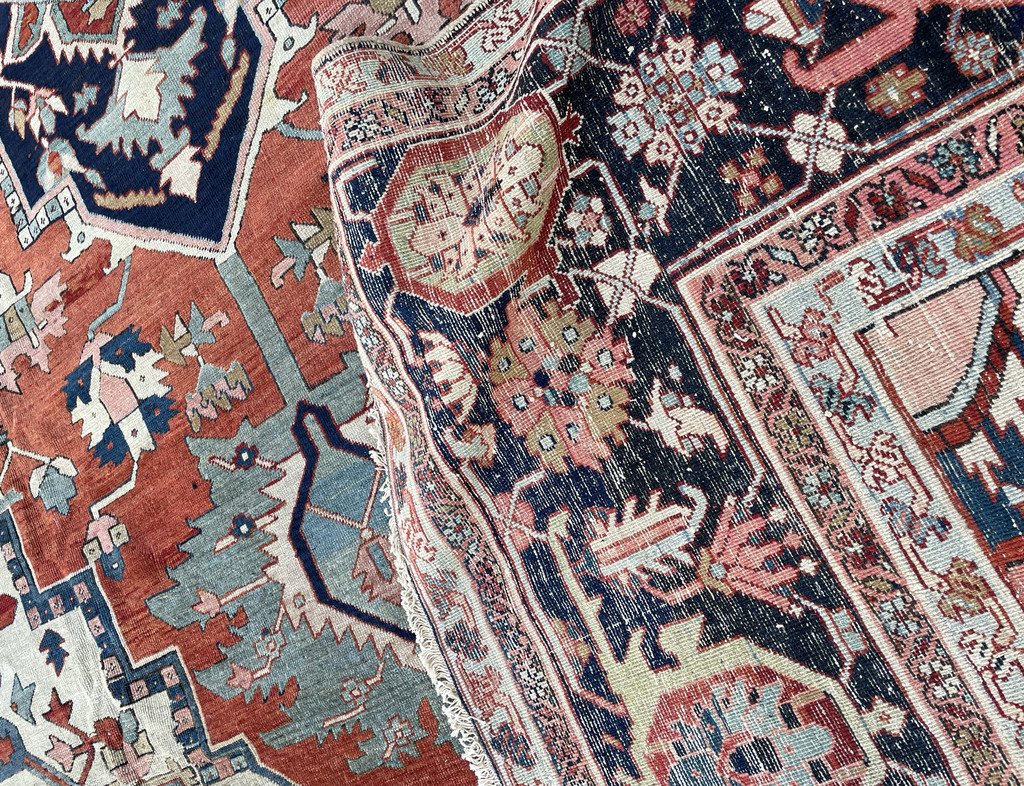
The wool is of outstanding quality, giving the carpet a soft, luxurious handle while retaining the durability for which Heriz-region weavings are famous. Despite its age, the carpet remains in good condition, preserving its strong decorative impact and collector appeal. Its monumental dimensions make it particularly desirable for large residences, historic homes, estates, and important interior design projects.