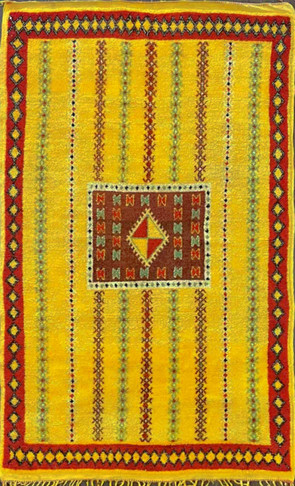
Vintage handmade Tribal North African Moroccan rug, most desirable and unique 4'3" x 7', This magnificent vintage mid-century v rug, it is an explosion of rich and vivid color color and texture, Impressive yellow, green and eggplant color rug with amazing floral geometric strip design and central medallion.
The Moroccan rugs are most famous for their dynamic color designs and bold geometric patterns,
features bold designs that differ from traditional traditional Persian rugs adding an element of timelessness.
This rug is in excellent condition. Made of fine wool.
Foundation: Wool pile on cotton foundation
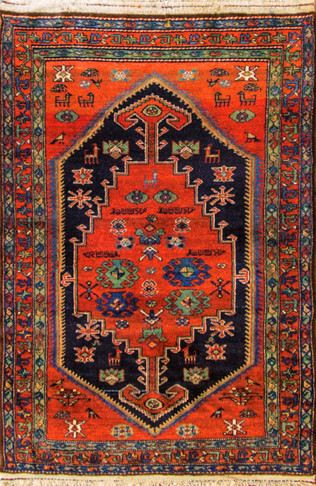
Colors: Rich brick-red field, deep navy blue medallion, ivory, sky blue, soft green, and camel accents
This handsome antique Persian Serapi/Heriz rug displays the bold geometric artistry that has made Heriz carpets among the most sought-after village rugs in the world.
Colors: Rich coral-red, deep indigo blue, ivory, soft green, sky blue, and camel accents
Special Feature: Includes an inscribed Farsi dedication or congratulatory inscription
This charming antique Persian Azerbaijan rug is a beautiful example of Northwest Persian village weaving. The design is centered around a dramatic black stepped medallion set against a vibrant coral-red field.
Material: Hand-spun wool on cotton foundation
Quality: Good village weave with excellent natural colors
This attractive early 20th-century Persian Karaja rug is a classic example of the weaving traditions of the Heriz district in Azerbaijan, Northwest Persia.
Material: Hand-spun wool on wool foundation
Quality: Fine tribal weave with excellent natural vegetable dyes.
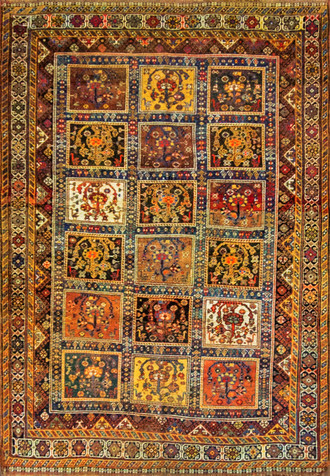
This beautiful late 19th-century Persian Qashqai rug is a highly decorative and collectible example of the classic Garden (Khesti) design, one of the most admired patterns woven by the Qashqai tribes.
Material: Fine hand-spun wool on wool foundation
Quality: Fine tribal weave with excellent drawing and outstanding natural colors
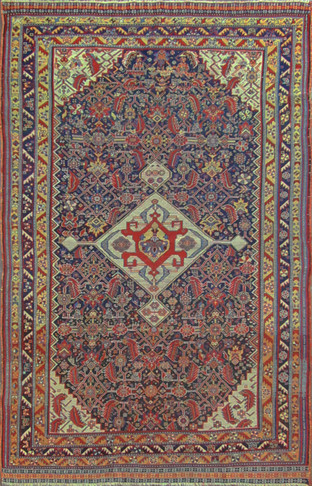
This beautiful late 19th-century Persian Qashqai rug is a superb example of the artistry and creativity of the nomadic Qashqai tribes. Finely woven with hand-spun wool and natural vegetable dyes, the rug displays a richly detailed allover geometric design set upon a deep midnight-blue field.
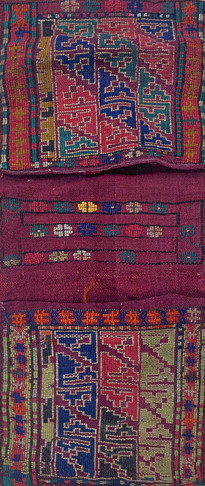
This charming antique tribal storage bag displays a bold and highly decorative geometric design characteristic of the nomadic weaving traditions of Northwest Persia and Eastern Anatolia. The bag is woven in richly saturated shades of madder red, aubergine, deep indigo, ivory, emerald green, saffron yellow, and rose, all harmoniously balanced against a dark wine-colored ground.
The front features a series of large stepped geometric medallions arranged in vertical panels, creating a powerful tribal composition.
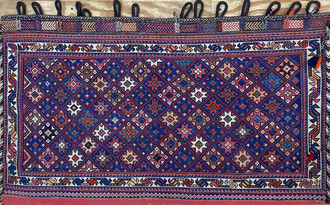
This outstanding antique tribal saddlebag is a beautifully woven example of early 20th-century nomadic craftsmanship, preserved in exceptional condition. The front panel displays an elegant lattice design composed of dozens of small diamond compartments, each enclosing stylized star and rosette motifs.