Rare Antique Yomud Turkoman Prayer Rug Western Turkestan
Click image to enlarge it


Size:
3'0" x 4'0" - 91cm x 122cm
Origin:
Period:
Early 19th century
Materials:
Wool pile, wool warp & weft
Condtion:
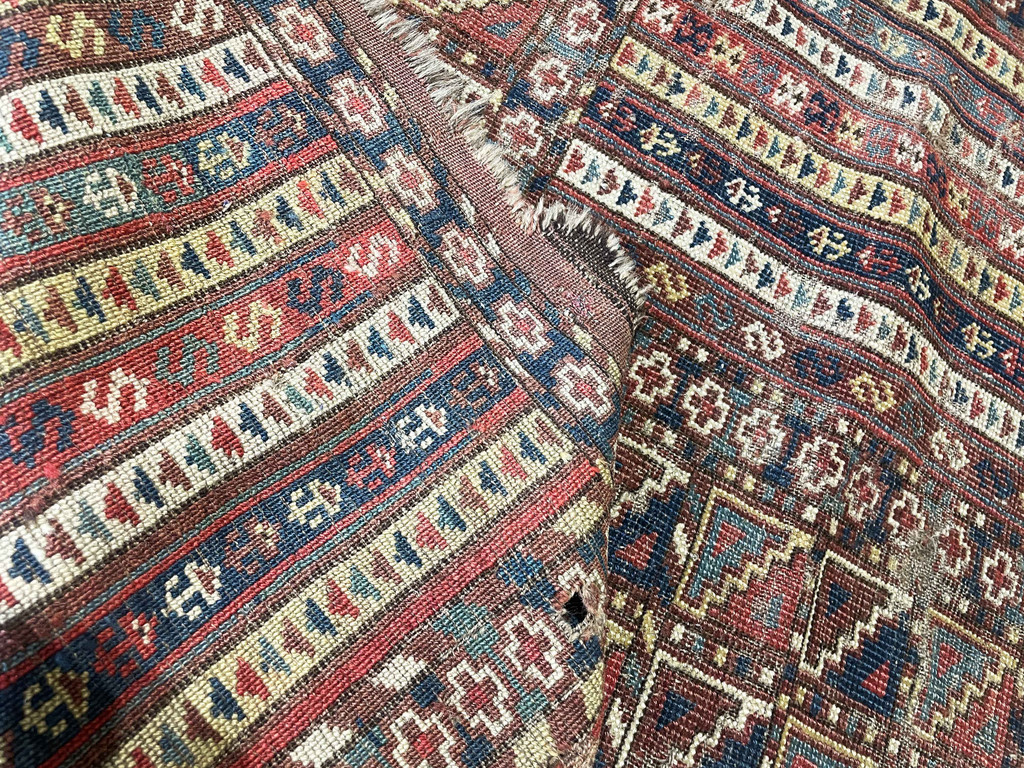
Significant age-related wear. Losses along sides and ends. Structural weakness in places. Surviving design remains highly readable. Authentic untouched appearance. For a piece of this rarity, collectors often value originality and age more than condition
Price:
$6,000.
Item#:
11109C
Notes:
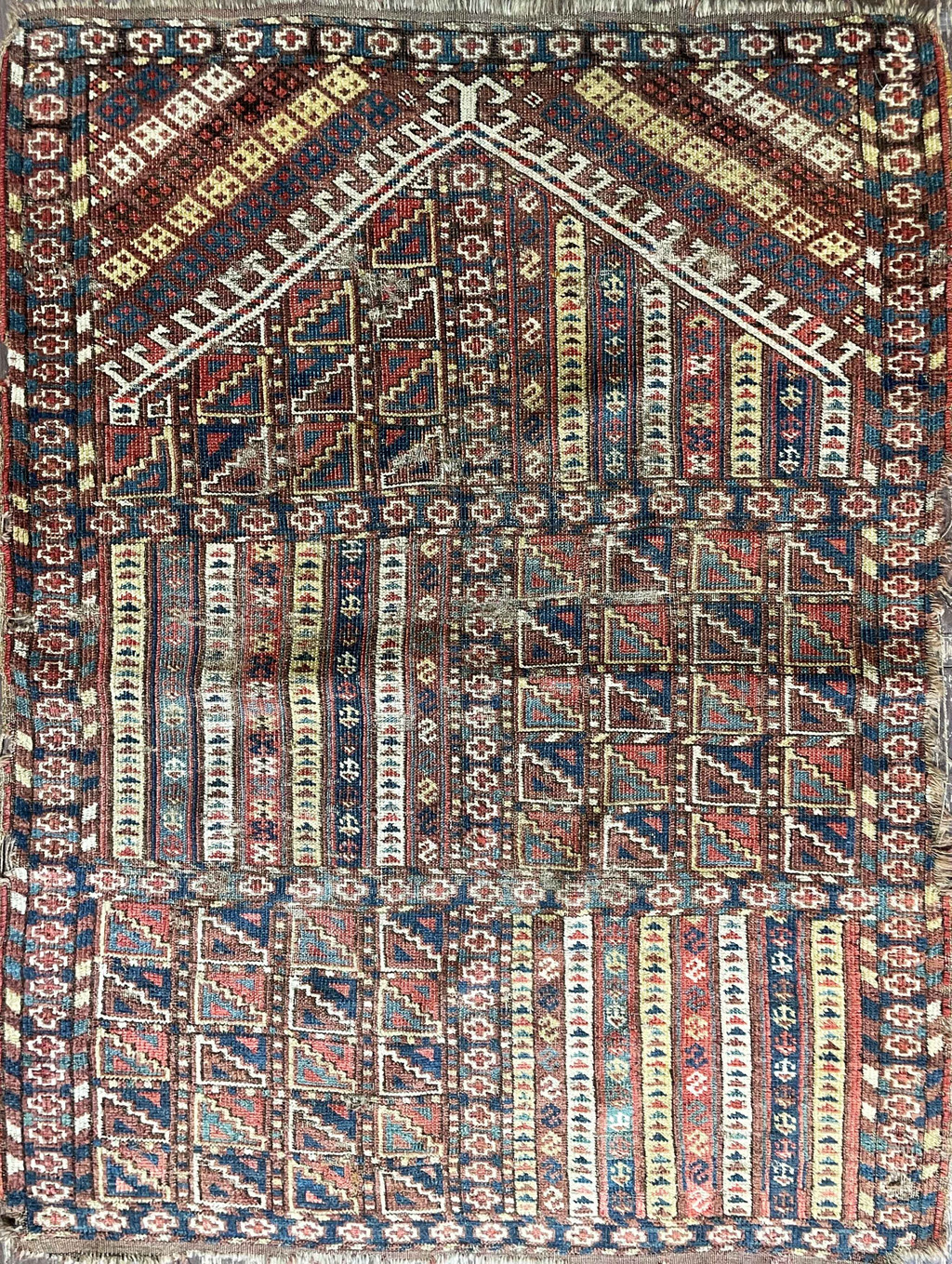
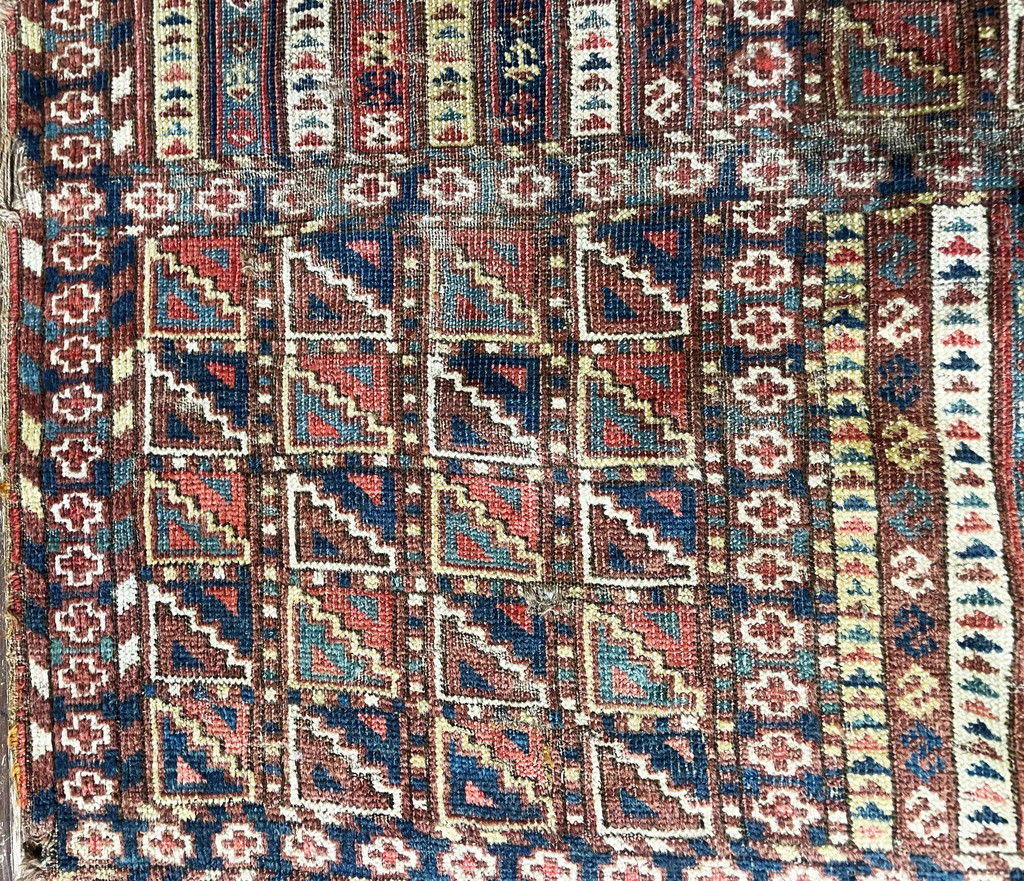
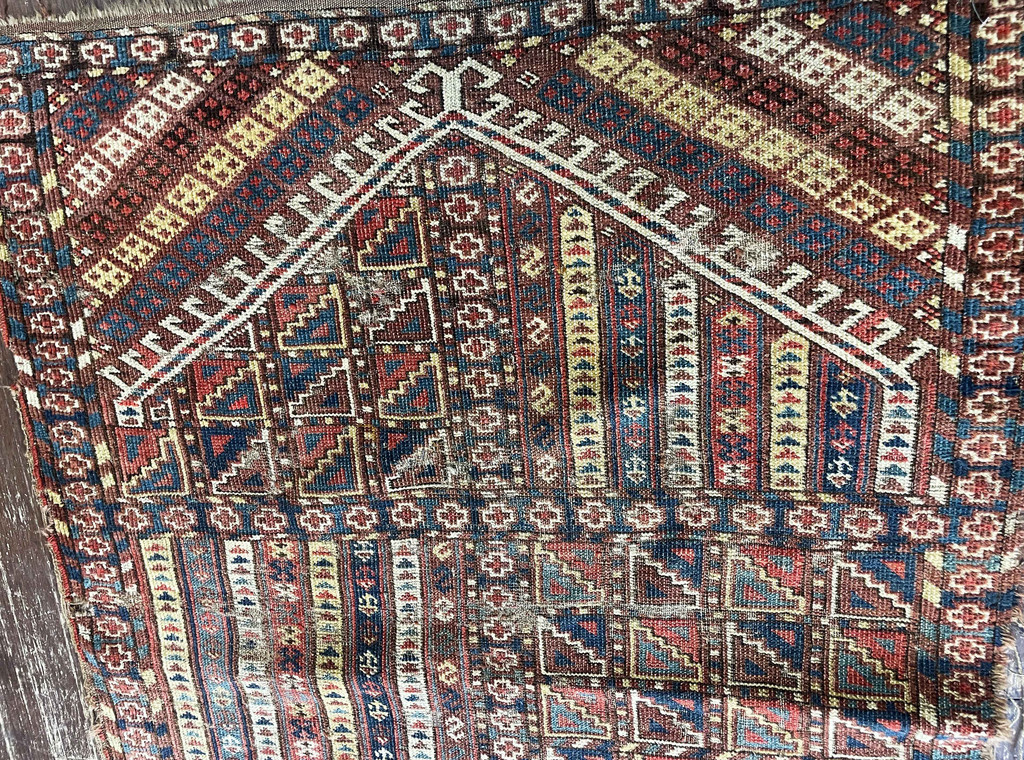
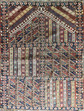
An exceptionally rare and highly unusual antique Yomud Turkoman prayer rug featuring one of the most distinctive compartmented designs encountered in Turkmen weaving. The composition is organized around a boldly drawn ivory-outlined prayer niche rising from the lower field, while the remaining field is divided into alternating panels of geometric lattice motifs and multicolored striped bands filled with archaic tribal devices.
Unlike conventional Yomud prayer rugs, which typically employ guls or simple geometric fields, this example displays a complex architectural arrangement suggestive of ancient tent-furnishing traditions adapted into a prayer format. The compartmentalized design, intricate striped panels, and stepped hooked motifs create a visually powerful composition unlike the standard Turkmen repertoire.
The color palette consists of deeply aged madder red, dark indigo blue, ivory, teal, and walnut brown, all softened by time into a rich, harmonious patina. The drawing remains highly individual and tribal, exhibiting the spontaneity and symbolic character associated with early Turkmen weaving.
The border system is equally unusual, incorporating protective tribal motifs and reciprocal devices that reinforce the archaic character of the piece.
What makes this rug remarkable is its extraordinary design rarity rather than its condition. Prayer rugs of this format are seldom encountered, and the compartmented field is highly unusual within Yomud weaving. The alternating striped symbolic bands suggest an older tribal vocabulary, while the drawing appears entirely non-commercial, deeply personal, and rooted in an early weaving tradition. Its primitive, almost proto-Turkmen character sets it apart from more familiar examples, making it the type of piece that attracts advanced collectors of tribal rugs because it does not fit neatly into established or published categories.