antique Shahsavan Sumakh Khorjin (double saddlebag)
Click image to enlarge it


Size:
2'0" x 4'5" - 61cm x 135cm
Origin:
Period:
C 1890
Materials:
Wool pile, wool warp & weft
Condtion:
Original structure intact. Original lacing and closure system present. Strong colors throughout. Minimal wear for age. No major losses visible. Highly displayable and collectible.
Price:
$3,600.00
Item#:
16941
Notes:
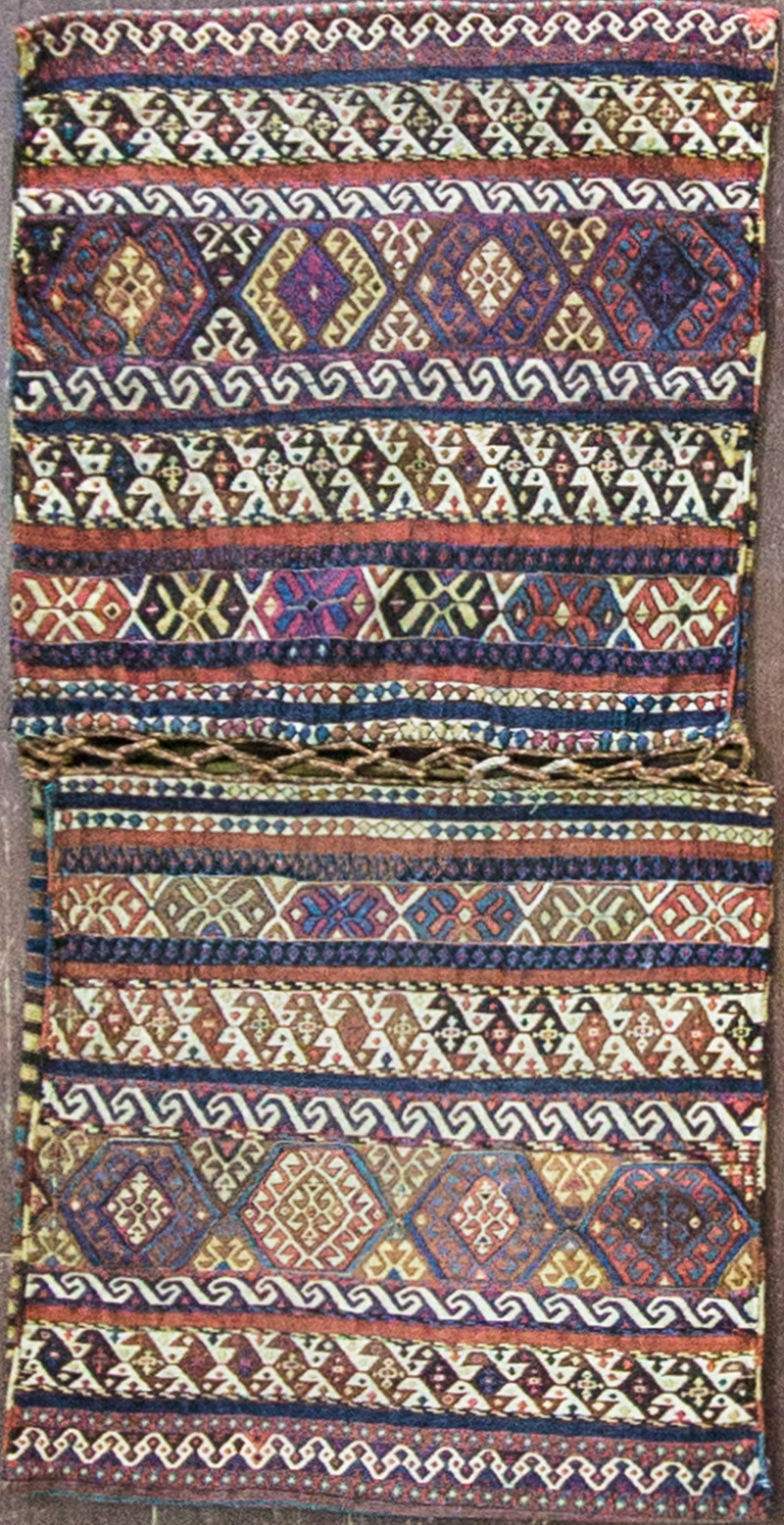
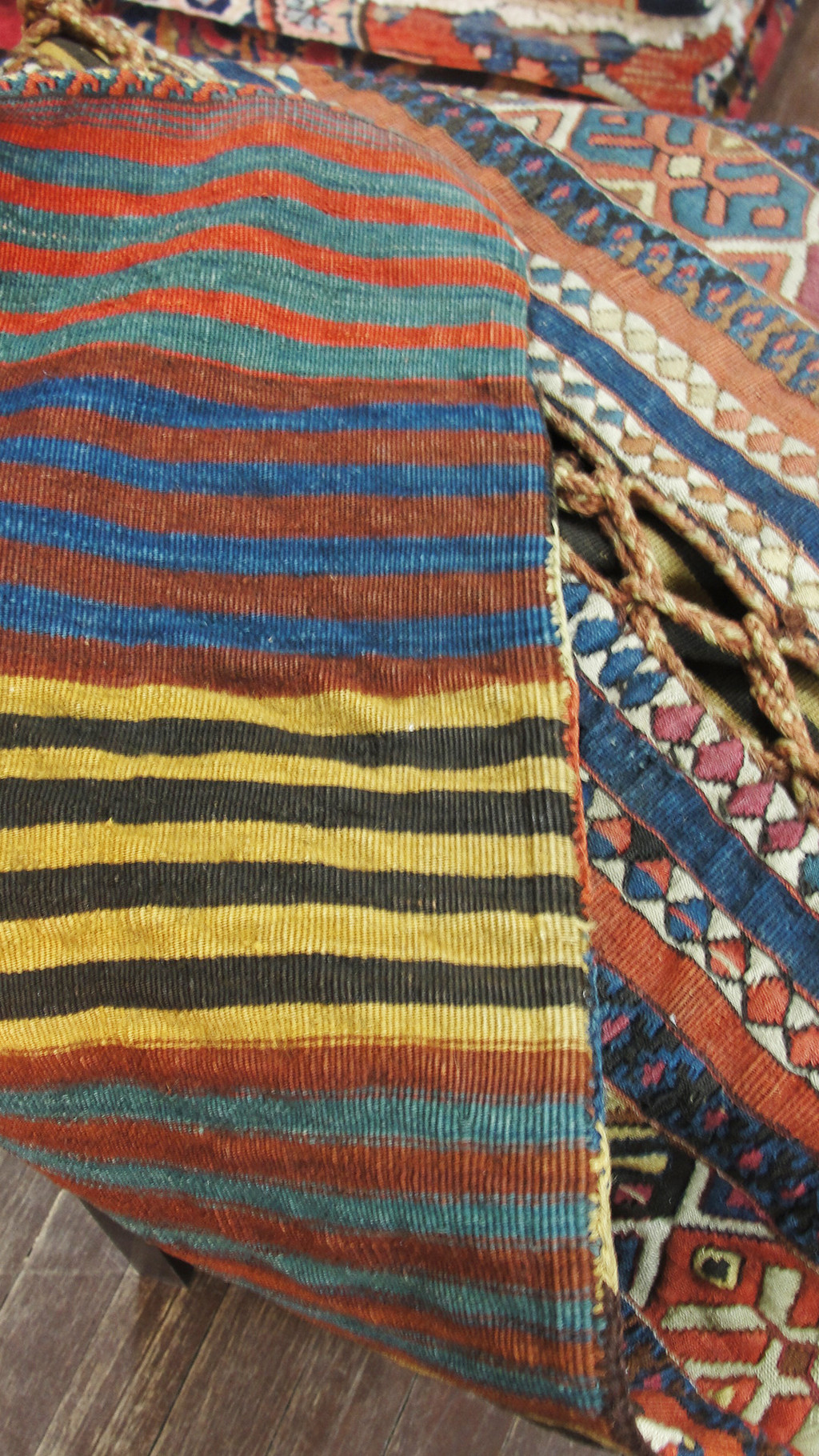
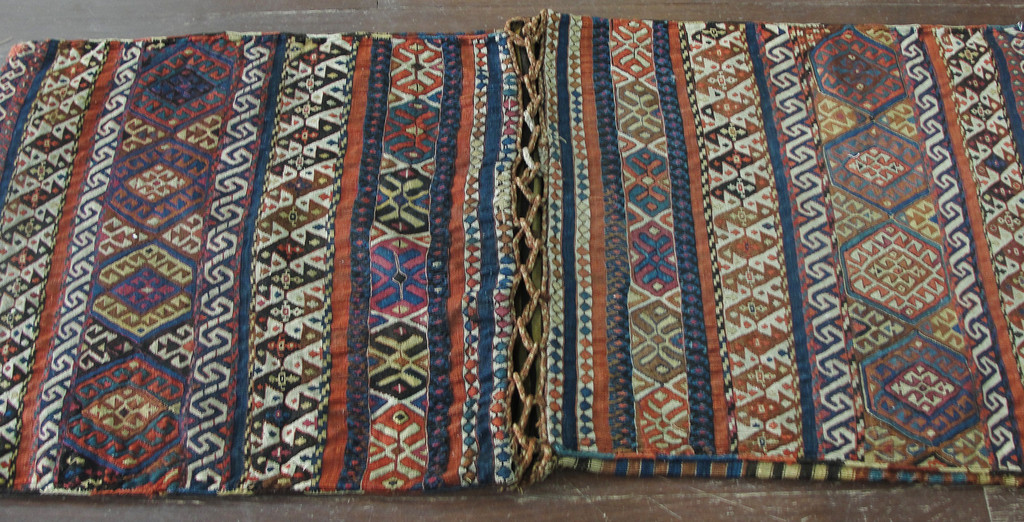
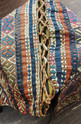
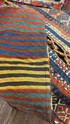
A beautiful antique Shahsavan double saddlebag woven in the intricate sumakh technique and preserved in remarkable condition. The bag faces display alternating horizontal bands of geometric tribal motifs, hooked diamonds, ram's horn devices, and stylized protective symbols rendered in rich natural dyes of indigo blue, madder red, ivory, camel, and soft aubergine. The striped flatwoven back exhibits exceptional color harmony with alternating bands of blue, red, brown, yellow, and teal, while the original braided closure cords and lacing system remain intact, vividly illustrating the bag's original nomadic function.
What makes this khorjin particularly special is not only its decorative beauty but also its outstanding state of preservation. Unlike many surviving examples that have been separated, cut down, or heavily worn, this piece retains its original double saddlebag format, complete with its braided closure system and beautifully preserved striped back. The crisp geometric drawing, excellent natural dyes, and fine sumakh workmanship combine to create a highly decorative and authentic tribal textile. Collectors especially value examples that survive in such complete condition, as they provide a direct connection to the weaving traditions and daily life of the nomadic Shahsavan tribes.
The natural dyes have aged beautifully, producing a warm patina while retaining remarkable color saturation and clarity. Preserved in excellent antique condition with minimal wear, strong colors, and no major losses visible, this is a highly displayable and collectible example of late nineteenth-century Shahsavan weaving, appealing equally to tribal textile collectors and discerning interior designers.