Antique Tekke-Hatchli (Hatchlu) Turkoman Rug
Click image to enlarge it



Size:
3'7" x 4'7" - 109cm x 140cm
Origin:
Period:
Early 19th century
Materials:
Wool pile, wool warp & weft
Condtion:
Minor losses to portions of the side borders Areas of wear consistent with age Small old repair and patch Structurally stable Attractive overall appearance Strong design integrity
Price:
$8,000.
Item#:
15948
Notes:
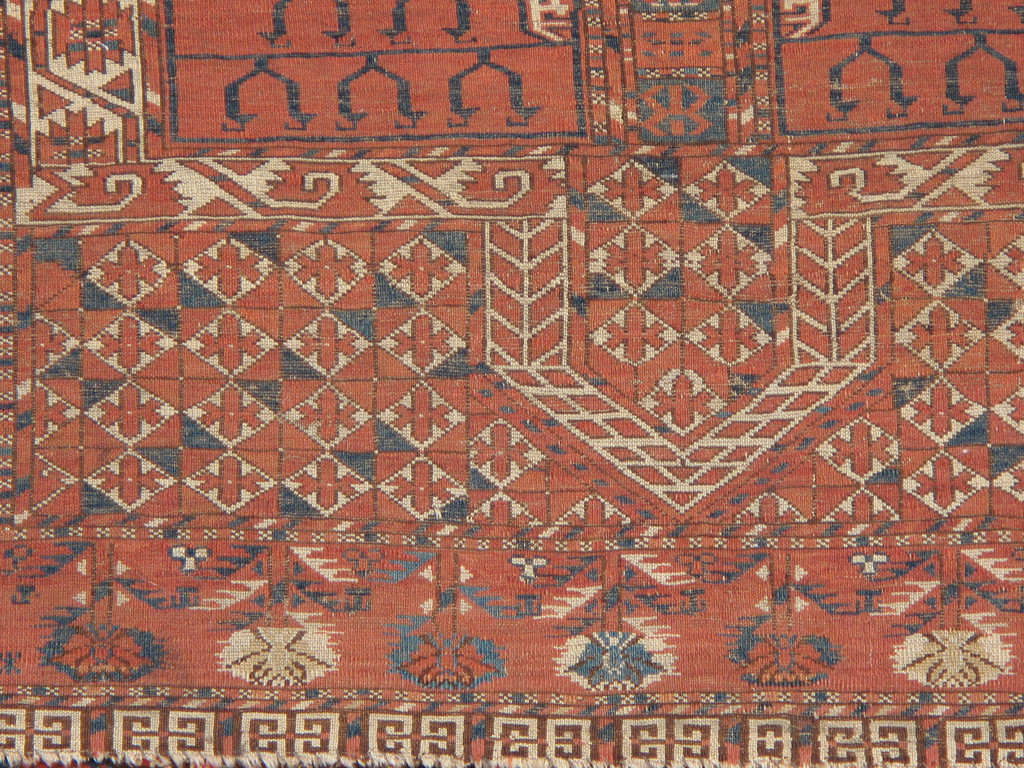
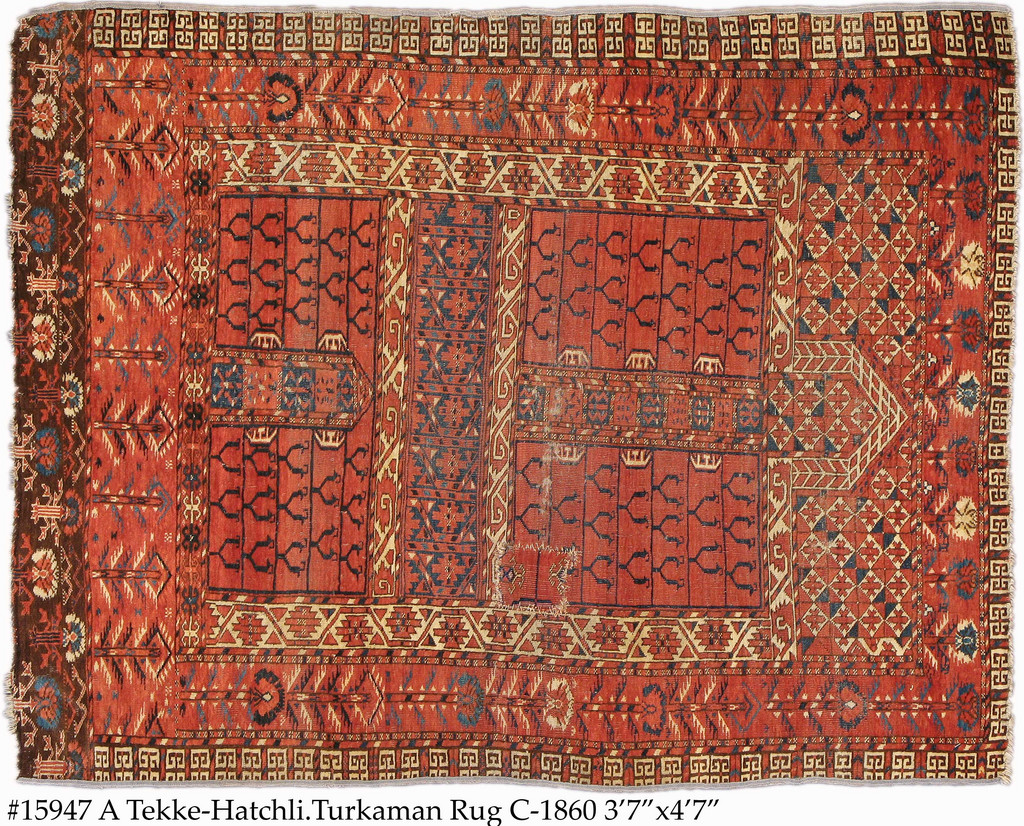
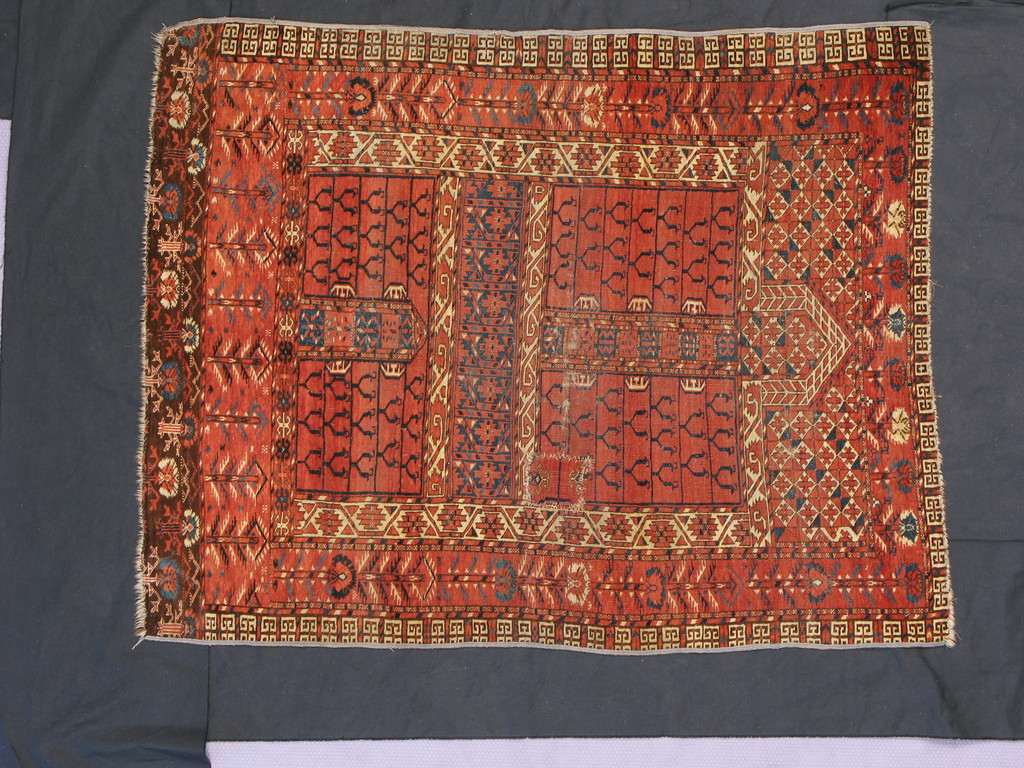
The design is the key. This is not a standard gul carpet. It belongs to the rare Hatchli (Hatchlu) group, a type associated with early Turkoman weavings. The compartmented layout, architectural lattice, tree-like motifs, stepped forms, and unusual geometric panels differ significantly from the repetitive gul patterns found in most Tekke rugs.An exceptionally rare and highly decorative antique Turkoman Hatchli rug woven during the mid-19th century. The rug displays a complex architectural composition featuring four compartmented panels containing stylized tree motifs, framed by elaborate geometric borders and lattice elements. The design possesses a striking primitive quality that reflects the earliest Turkoman tribal weaving traditions.
The palette consists of rich madder reds, brick reds, ivory, and indigo blue, softened by more than a century of age. The drawing is highly individualistic and demonstrates the creative freedom often found in the finest tribal weavings.
Particularly attractive are the stepped lattice panels on the right side, the compartmentalized tree forms, and the bold reciprocal borders, all of which contribute to a distinctive visual presence seldom encountered in later Turkoman rugs.
The wool appears lustrous and finely spun, with the surface displaying the soft patina that collectors prize in early Central Asian textiles.This type of Hatchli design is considerably scarcer than ordinary Tekke, Ersari, or Yomud rugs. Collectors of early Central Asian tribal rugs place a premium on unusual architectural and compartmentalized designs, especially when accompanied by good age and attractive color.