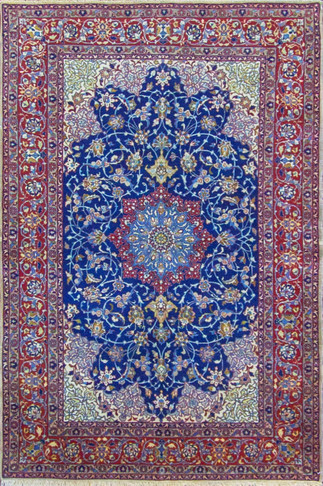
The Iranian city of Isfahan has long been one of the centres for production of the famous Persian carpet, 3'7" x 5'4". Isfahani carpets are known for their high quality. The most famous workshop in Isfahan is Seirafian.
Weaving in Isfahan flourished in the Safavid era. But when the Afghans invaded Iran, ending the Safavid dynasty, the craft also became stagnant.
The high knot density antique carpets in which Isfahan excelled continued to be woven in the late 19th and 20th centuries, maintaining the original inspiration and attention to refinement and detail.
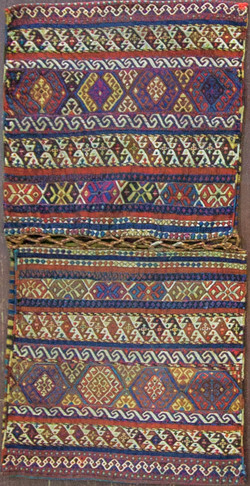
A beautiful antique Shahsavan double saddlebag woven in the intricate sumakh technique and preserved in remarkable condition. The bag faces display alternating horizontal bands of geometric tribal motifs, hooked diamonds, ram's horn devices, and stylized protective symbols rendered in rich natural dyes of indigo blue, madder red, ivory, camel, and soft aubergine.
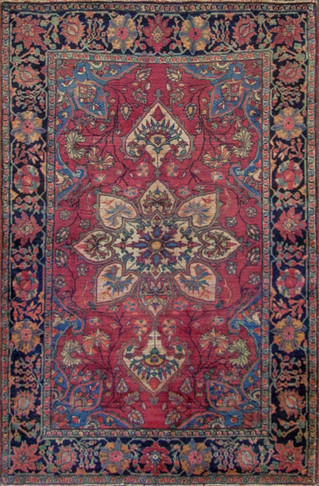
The Feraghan district area have a long history of rug and carpet weaving in the 19th century, many British companies opened oriental carpet factories and began to produce fine Persian Feraghan rugs and carpets for export to Europe. Antique Feraghan carpets and rugs are prized for their sturdy construction and their fine quality.
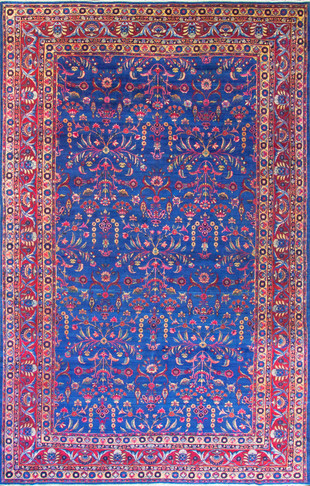
Antique Persian Laver Kerman carpet, amazing color in excellent condition with unique blue background.
Kirman was a very important antique rug weaving centre dating from the Golden Age of Persian culture under the Safavid dynasty in the 16th century, on a par with Tabriz and Kashan in esteem. The color palette of Laver Kirman antique Persian rugs is unusually soft and delicate with a European grace.
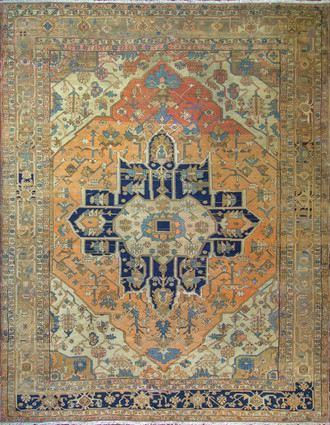
19th century 10' x 13' unusual antique Serapi carpet of Persia. Very unusual colors.
Woven in the rugged mountains of Northwest Persia, Serapi rugs are a distinct Heriz region style, with finer knotting and more large-scale spaciously placed antique carpet designs than other rugs from this area. Persian carpets had to be taken by their weavers to Serab, 30 miles distant, to be marketed.
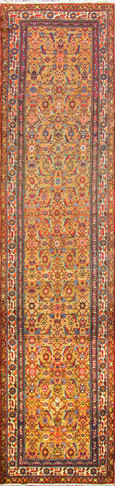
This elegant Antique Persian Malayer runner, woven around 1920, is a superb example of the refined village craftsmanship for which the Malayer weaving district is celebrated. Its impressive length, graceful proportions, and finely detailed all-over design make it an ideal choice for a grand hallway or gallery space.
The runner features a warm golden camel field filled with an intricate lattice of delicate floral sprays, palmettes, rosettes, and gracefully curving boteh (paisley) motifs.
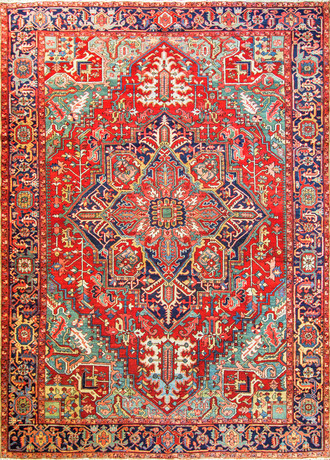
A charming antique Persian Heriz carpet it has a range of outstanding colors.
A great painting is measure by beauty of its colors and the same statement goes for this rug. Heriz rugs are Persian rugs from the area of Heriz, East Azerbaijan in northwest Iran, northeast of Tabriz. Such rugs are produced in the village of the same name in the slopes of Mount Sabalan. Heriz carpets are durable and hard-wearing and they can last for generations. 19th century examples of such carpets are often found on sale by major auction houses in United States and Europe.
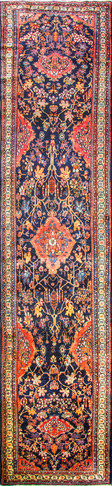
The Bakhtiari tribe, based in Chahar Mahaal and Bakhtiari, is well-known for their rugs and weavings. They have been weaving rugs exported around the globe since the early 19th century.